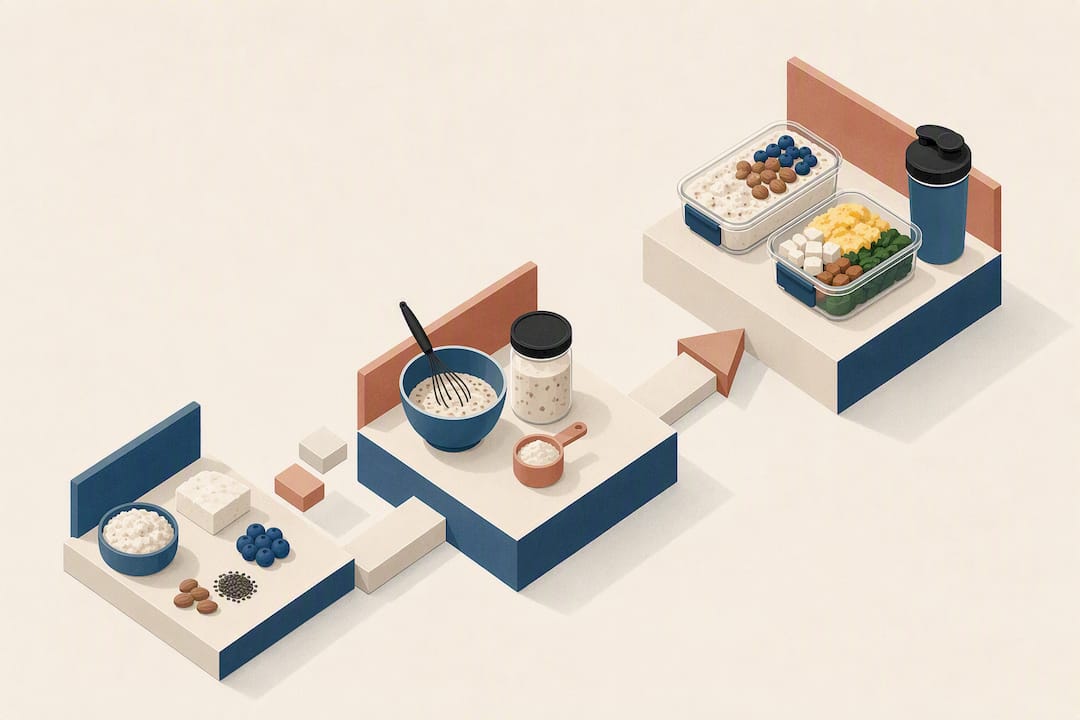
Aim for 20 to 30 grams of protein at breakfast, with roughly 30 grams giving you the strongest satiety benefit. The simplest way to get there is one protein anchor, such as eggs or Greek yoghurt, plus one supporting source like cottage cheese or a scoop of protein powder. Get that combination right and you delay hunger, steady your energy, and cut down on the mid-morning snack run.
TL;DR:
- Swapping regular yogurt for Greek yogurt or adding a scoop of protein powder can help reach 30 grams of protein without extra effort.
- Batch-cooking options like egg muffins or frittata slices in advance allows for quick, high-protein breakfasts throughout the week.
- Incorporating plant-based proteins such as tofu, tempeh, or chickpeas with grains and legumes ensures complete amino acid profiles without sacrificing protein content.
- Consuming meals with around 30 grams of protein can modestly suppress appetite and promote fullness, supported by clinical research findings.
- Combining two high-protein sources, like eggs and tinned fish, creates effective breakfast options delivering 25 to 30 grams of protein without complex prep.
You don’t need a new recipe every day. You need a handful of reliable options you can rotate without thinking too hard, each one built around a protein anchor. Here’s a shortlist that covers eggs, dairy, fish, and plant-based options, with rough protein counts and how long each one actually takes.
For mornings you’re eating on the move, blend a smoothie with Greek yoghurt, a banana, a scoop of protein powder, and a splash of milk. That alone gets you close to 30g without a single dish to wash beyond the blender jug.
Most breakfasts fall short of 20g not because the ingredients are wrong, but because the portions are too small. A single swap usually closes most of the gap.
Pro Tip: Check the label on your protein powder and yoghurt brand — actual grams per serving vary more between brands than people expect, sometimes by 5g or more for the “same” product.
Two ready-to-copy builds that provide a protein-rich breakfast:
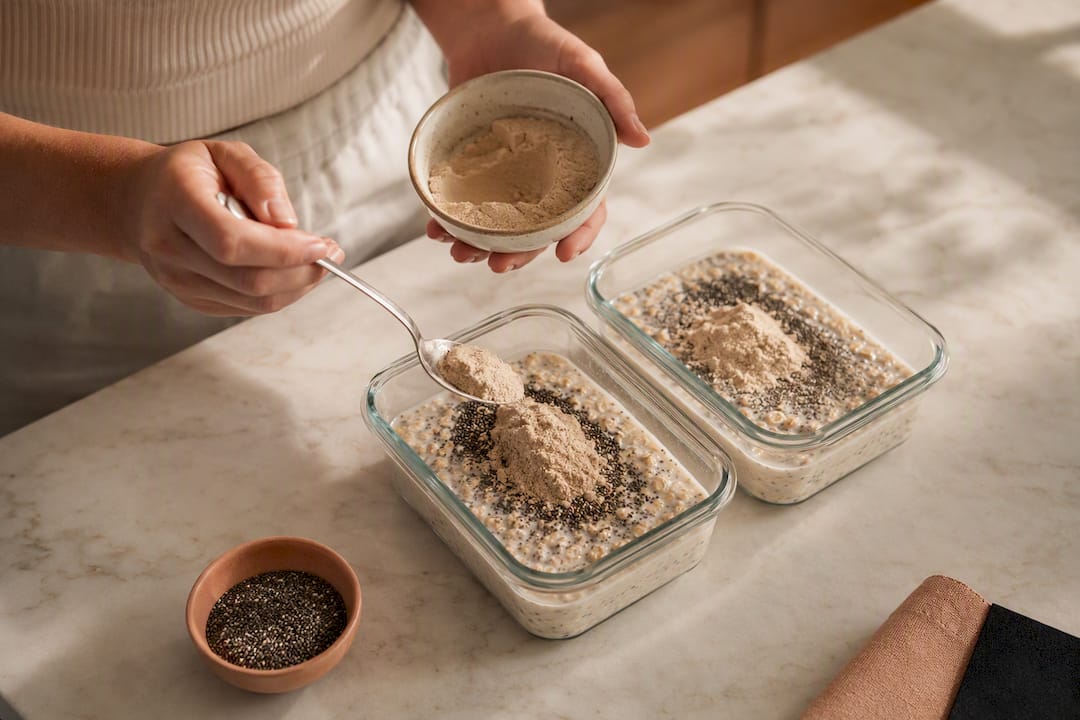
Sweet build: overnight oats with protein powder and chia seeds, prepped the night before.
Savoury build: two-egg omelette with cottage cheese and wholegrain toast, ready in under 10 minutes.
If you train in the morning, timing matters less than people assume. The old research on a tight post-workout “anabolic window” has softened considerably; what matters more is getting a proper protein dose somewhere within a few hours of training, and breakfast is usually the easiest place to do that.
Batch cooking is what actually makes high-protein breakfasts sustainable, because willpower at 7am is unreliable and cooking from scratch every day isn’t.
Pro Tip: Pack a reheated egg muffin or a pot of overnight oats in an insulated container the night before — it removes the only decision left in your morning, which is usually the one that gets skipped.
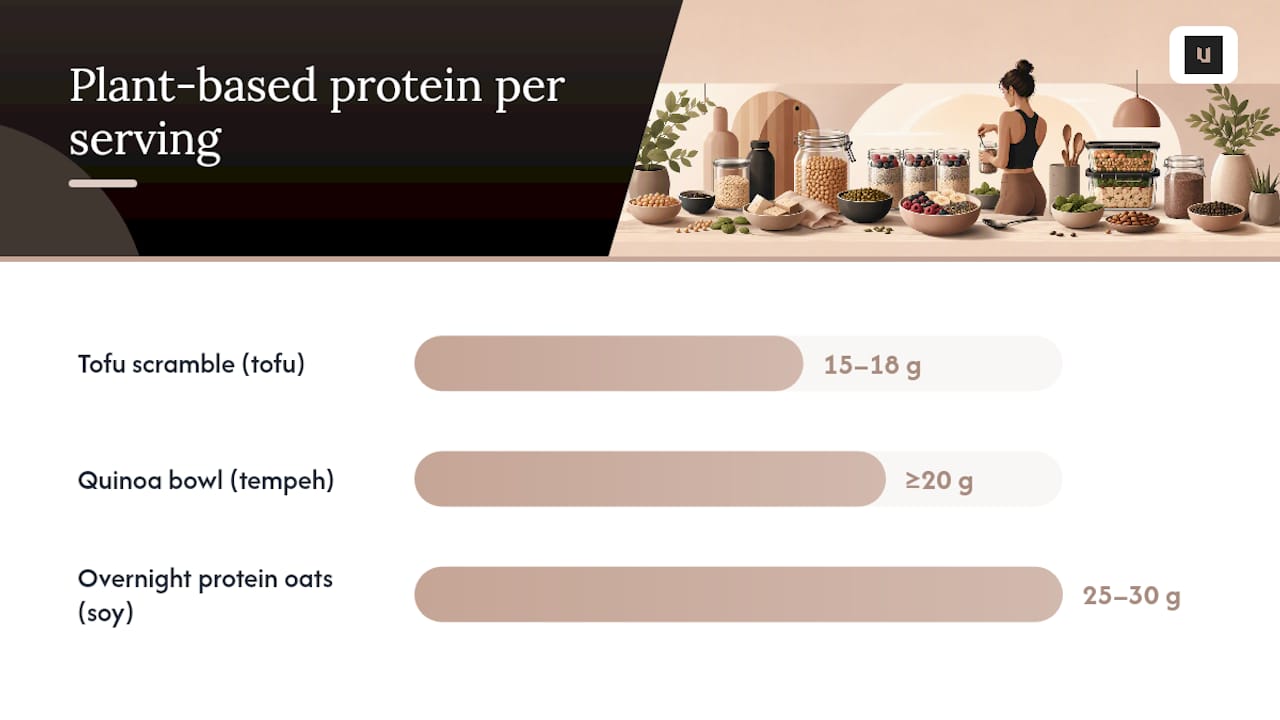
Plant-based doesn’t mean lower protein if you build the plate properly. A tofu scramble with turmeric and nutritional yeast gives you 15 to 18g per serving. A quinoa bowl with tempeh and roasted chickpeas can reach 20g or more. Protein overnight oats made with soy milk and a plant-based protein powder land around 25 to 30g, much like the dairy version.
The trick with plant proteins is combining sources so the amino acid profile is more complete. Pairing wholegrains or oats with legumes or soy products, such as tempeh, tofu, or edamame, gives you a broader spread of essential amino acids than either food gives alone, a principle backed by general public-health guidance on balanced breakfasts.
Keep a plant-based pantry stocked with firm tofu, tinned chickpeas, tempeh, plant protein powder, and chia seeds, and you’re rarely more than 10 minutes from a solid breakfast.
Multiple trials point in the same direction: breakfasts with 30 grams or more of protein increase satiety and often reduce how much people eat later in the day, compared with low-protein breakfasts or skipping the meal entirely, according to a review of breakfast consumption and weight management mechanisms.
Randomised trials found breakfasts containing higher protein amounts (e.g., around 30 to 45 grams) modestly suppressed appetite and increased diet-induced thermogenesis compared with lower-protein meals, indicating stronger effects with greater protein content.
That’s the finding from a controlled trial on dietary protein at breakfast. The practical read: 20g protein gives a modest satiety bump, 30g gives a noticeably stronger one. Results vary by study size, whether the protein came in solid or liquid form, and individual differences in appetite response, so treat 30g as a strong target rather than a strict rule.
Small-group coaching and nutrition accountability can help people turn a one-off recipe into a habit that lasts through busy days. A coaching model based on individual plans rather than generic advice supports this approach. A simple starting plan: pick two builds from this list and prep one in batch each week.
Pick two builds from this guide, prep one in batch on a Sunday, and eat both across three mornings. Track your mid-morning hunger and energy each day. Coaches favour rotating one savoury and one sweet option, which cuts decision fatigue and makes the habit stick longer than a single fixed recipe ever does.
— Vitalij
Recipes are the easy part. Sticking with them for months, alongside training that actually fits your life, is where most people fall off. This gap can be addressed by small-group personal training that pairs workouts with nutrition accountability instead of just providing printed handouts.
If you’re in Sheffield and want a coach checking in on both your training and your breakfast habits, small-group personal training gives you an individualised plan and a community that notices if you slip. Prefer a lower-commitment start? The fitness classes option bundles habit support with unlimited sessions. And if you’re a parent trying to fuel a young athlete properly around training, the youth athlete development programme covers speed, agility, strength and power work alongside the nutrition basics. None of this replaces medical advice, but if you want a second pair of eyes on your plan, book a chat and see whether small-group coaching fits your week.
This article is general information, not a substitute for advice from a qualified doctor. Consult a qualified healthcare professional about your own circumstances before acting on anything here.
Among common options, a cottage cheese bowl or a smoked salmon and egg combination tend to top the list, delivering 25 to 30g protein without needing a protein powder boost.
Combine one protein anchor, such as three eggs or a cup of Greek yoghurt, with one supporting source like cottage cheese, tinned fish, or a scoop of protein powder. That pairing reliably lands near 30g.
Stack two strong sources together, such as a three-egg omelette with cottage cheese stirred in, plus a side of smoked salmon or a protein shake. Each addition of tinned fish or protein powder adds 20 to 25g on its own.
Getting a solid protein dose within a few hours of training matters more than hitting a strict window, so a high-protein breakfast eaten shortly after morning exercise still supports recovery effectively.
Yes, 20g gives a measurable satiety benefit, though trial evidence suggests 30g produces a noticeably stronger effect on fullness and reduced snacking later in the day.