
Low-impact aerobic work, aquatic exercise, targeted strength training, mobility drills and balance exercises form the backbone of any joint-friendly workout plan. The practical target is roughly 150 minutes of moderate aerobic activity a week plus two strength sessions. Therapeutic exercise is also recognised as a core treatment for joint pain rather than an optional extra. Give it six to eight weeks before expecting real change, and expect some mild discomfort along the way.
TL;DR:
- Performing resistance exercises at 8 to 12 reps at effort levels that feel genuinely challenging helps strengthen muscles around joints without overloading them.
- Starting with three weekly sessions of gentle walking, water-based activity, and low-resistance cycling gradually builds toward the recommended 150 minutes of aerobic activity per week.
- Monitoring joint responses using a traffic-light system ensures adjustments are made early, reducing the risk of setbacks and chronic pain.
- Incorporating strength, mobility, aerobic, and balance work consistently offers the best protection for joint health, each addressing a different aspect of joint resilience.
- Supervised, personalized training programs improve technique and progression, reducing the chance of developing painful movement habits and optimizing joint support.
Six activities cover most of what a sore-jointed beginner needs, and none of them require expensive kit.
Walking is the simplest entry point. Keep your pace conversational, stick to flat or gently uneven ground when you’re starting out, and wear proper trainers with decent cushioning rather than flat pumps or worn-out shoes.
Swimming and aquatic exercise take advantage of buoyancy. Water walking or aqua aerobics in shoulder-height water reduce weight-bearing stress dramatically while still giving your muscles resistance to work against.

Cycling, whether outdoors or on a stationary bike, spares the joints from impact. Get the seat height right (your leg should nearly straighten at the bottom of the pedal stroke) and you’ll avoid unnecessary knee strain.
Yoga and Pilates build mobility and low-load strength together, with breath work that helps you stay relaxed through tight spots rather than bracing against them.
Resistance bands and light machine work let you strengthen the muscles around a joint without loading the joint itself directly, which is exactly what protects it long term.
Elliptical machines, recumbent bikes and rowing machines all deliver a cardio workout with next to no jarring impact, making them solid alternatives on days when walking feels like too much.
You don’t need a complicated schedule. Two templates cover most starting points.
Beginner plan (3 days a week)
That adds up to roughly 40 to 50 minutes of aerobic work in week one. Add 5 minutes to one session each week until you’re close to the 150-minute weekly target.
Steady plan (4 days a week)
Always warm up with 5 minutes of easy movement and finish with gentle stretching. Don’t rush the pace week to week. Strength gains typically take six to eight weeks to show up, so consistency beats intensity every time.
Picking the right exercise starts with listening to how your joint responds, not with guessing. A traffic-light system, used widely in NHS physiotherapy guidance, gives you a straightforward way to judge that.
For strength work, aim for 8 to 12 reps per set at an effort where the last couple of reps feel genuinely hard. That’s roughly what pushes muscle to adapt without overloading the joint.
Progress in this order: extend the time or distance first, then add reps, then add resistance last. If a full session ever feels like too much, regress to a shorter version rather than skipping it entirely. A structured approach to tracking your progression makes it far easier to spot when you’re genuinely ready to add load versus just feeling optimistic.
Pro Tip: Write down what you did and how the joint felt the next morning, not just straight after. Delayed reactions are the ones that catch people out.
Supervised programmes add real value here, particularly for people managing an existing joint condition, because a trained eye catches poor movement patterns before they become painful habits. If you’re building strength training from scratch, this matters more than most people expect.
Each category protects your joints in a different way, and skipping one leaves a gap the others can’t fill.
Strength training builds the muscle that surrounds a joint, and stronger muscle takes load off the cartilage and ligaments doing the heavy lifting otherwise. Two sessions a week, hitting the major muscle groups, is a realistic minimum.
Mobility work keeps joints moving through their full range. Skip it and stiffness creeps in gradually, often without you noticing until a simple task like tying your shoelaces feels harder than it should.
Aerobic exercise supports circulation, helps with weight management, and encourages the natural lubrication that keeps joints moving smoothly. A combination of aerobic work, strengthening, stretching and balance training consistently outperforms any single approach on its own.
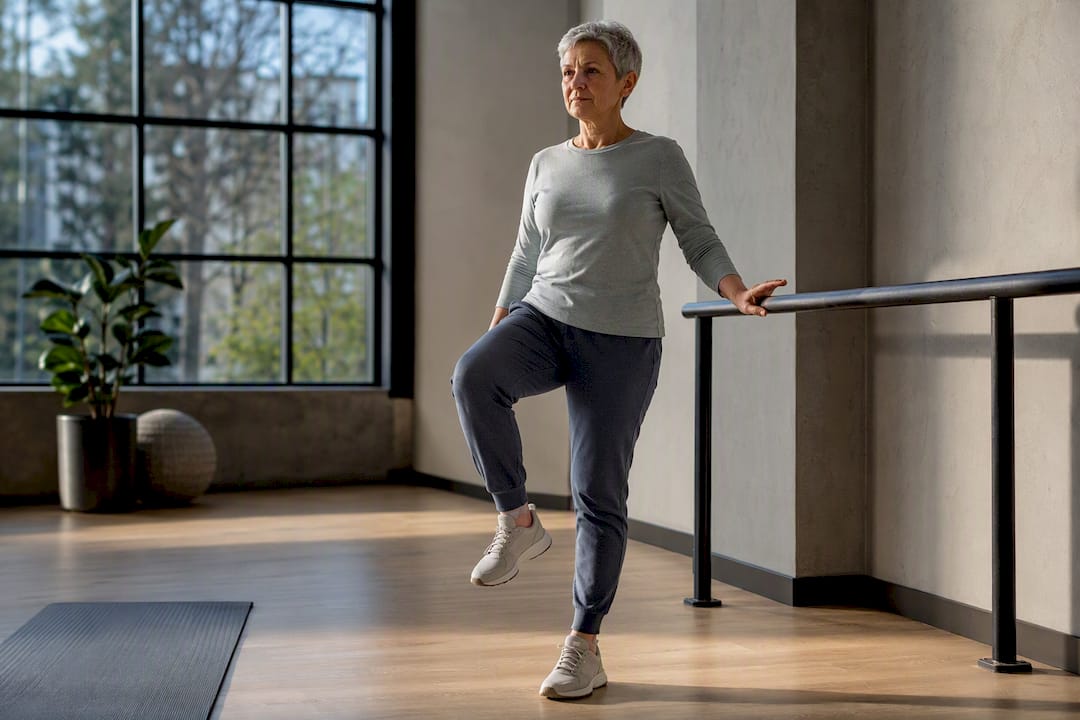
Balance and neuromuscular control get overlooked constantly, yet they’re what stop a minor stumble turning into a fall. Standing on one leg, walking heel to toe, or simple step-ups all sharpen this without any equipment.
Most joint discomfort during exercise is normal and expected. Some signs, though, mean stop and get it checked rather than push through.
Supervised therapeutic exercise is specifically recommended for people managing joint conditions, and a physiotherapist can tailor a programme when pain is persistent rather than occasional. For everyday flare-ups, pace yourself, drop the intensity for a few days, and lean on aids or supports if you have them rather than stopping activity altogether.
Unsupervised programmes leave a lot to guesswork. Individualised, supervised training catches movement compensations early, meaning the strengthening you do actually targets the muscles that need to take load off the affected joint rather than working around the problem.
That’s the model behind small group personal training at UNIT Health & Performance in Sheffield: individualised plans within a small group setting, with coaching that corrects technique and adjusts progression session to session. This approach suits anyone managing joint discomfort who wants accountability and a plan that adapts as they improve, rather than a generic template.
— Vitalij
If you’ve read this far wondering whether you’re doing the right exercises for your knees, hips, or shoulders, that uncertainty is exactly what supervised training removes. This is an alternative to training alone at home or following generic online routines: you get a plan built around your joints specifically, with a coach adjusting the load in real time instead of you guessing whether today’s ache is a green light or a stop sign.
Small group personal training at UNIT Health & Performance in Sheffield gives adults managing joint concerns individualised coaching within a supportive group, so technique gets corrected before it becomes a problem and progression happens on a schedule that suits your body. If group coaching isn’t quite the fit, the fitness classes cover strength and mobility work at a more flexible pace. Either way, the next step is simple: book a consultation and find out which format suits your joints best.
This article is general information, not a substitute for advice from a qualified doctor. Consult a qualified healthcare professional about your own circumstances before acting on anything here.