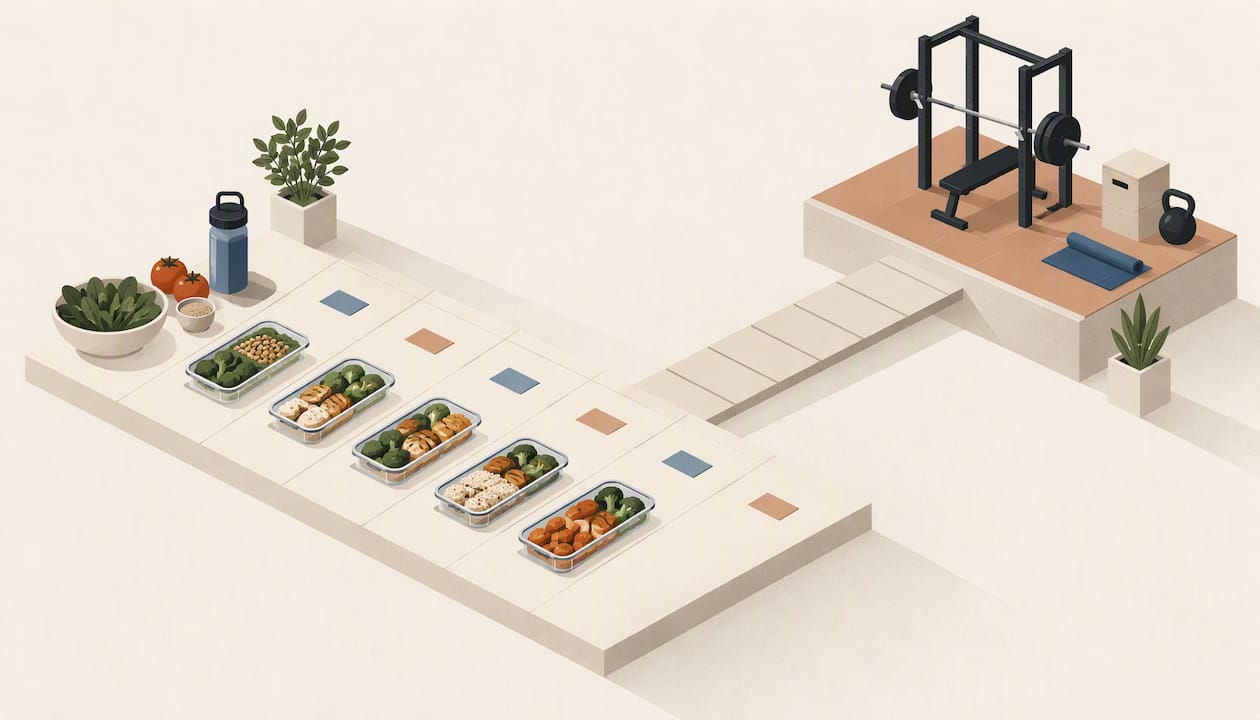
Meal prep for strength comes down to three things: enough protein in every meal, enough carbohydrate to fuel your training, and a cooking routine you can keep up on a busy week. Cook two or three big dishes once, portion them out, and you stop making food decisions when you are tired and hungry. This guide shows you how, in plain steps.
Strength training gives your body the reason to build muscle. Food gives it the material. If your meals are random, your results will be too.
Meal prep fixes the usual problems. You skip the 6pm “what shall I eat?” moment. You hit your protein without counting every gram each day. And you spend less, because you shop once with a list rather than grabbing food on the go.
There is research behind the time-saving side too. One medical review of home meal preparation describes batch cooking as a way to save time, reduce stress and give you more healthy options to choose from.
You do not need fancy containers or a bodybuilder’s diet. You need a plan that fits your week.
Start with two numbers: protein and calories.
For people building muscle, a review of nutrition for novice and intermediate bodybuilders suggests 1.6 to 2.2 g of protein per kg of body weight per day. The UK Sports Institute gives a similar range of 1.6 to 2 g/kg, which may rise to 2.5 g/kg if you are trying to gain weight.
Here is what that looks like for someone weighing 80 kg:
The same UK Sports Institute guide suggests spreading protein evenly through the day, with at least 20 to 30 g (or about 0.3 g/kg) every 3 to 4 hours. For our 80 kg person, 0.3 g/kg is 24 g per meal or snack. So three meals and two snacks with 25 to 35 g each gets you there.
If you would rather not do the sums by hand, a protein target calculator turns your body weight and goal into a daily number you can divide across your meals.
To add muscle you usually need to eat a little more than you burn. The same bodybuilding nutrition review recommends about 10 to 20% above maintenance for novice and intermediate lifters, aiming for weight gain of around 0.25 to 0.5% of body weight per week.
In real numbers, if you maintain your weight on 2,500 kcal a day, that is roughly 250 to 500 kcal extra. For an 80 kg person, 0.25 to 0.5% a week is about 200 to 400 g. If you gain faster than that, more of it is likely to be fat, so trim your portions a little.
If your goal is the opposite, losing fat while keeping muscle, our guides on building muscle and losing fat with small group training and a 45 to 60 minute meal prep for weight loss are the better starting point.
Protein gets the headlines, but it is not the whole meal.
A simple plate shape works well: a palm or two of protein, a fist or two of carbohydrate, a thumb of fat, and a big handful of vegetables. Adjust the carbohydrate up on hard training days.
Meat, fish, eggs and dairy are “complete” proteins because they contain all the essential amino acids. Most plant sources need to be combined to do the same job, according to the bodybuilding nutrition review. If you eat plant-based, mix foods across the day: beans with rice, lentils with wholegrain bread, tofu with quinoa.

The UK Sports Institute’s guide to basic food prep and cooking suggests planning meals from a bank of recipes, taking account of your training and the time you have to cook. It also suggests batch cooking or making double portions so you have leftovers. Here is how to turn that into a routine.
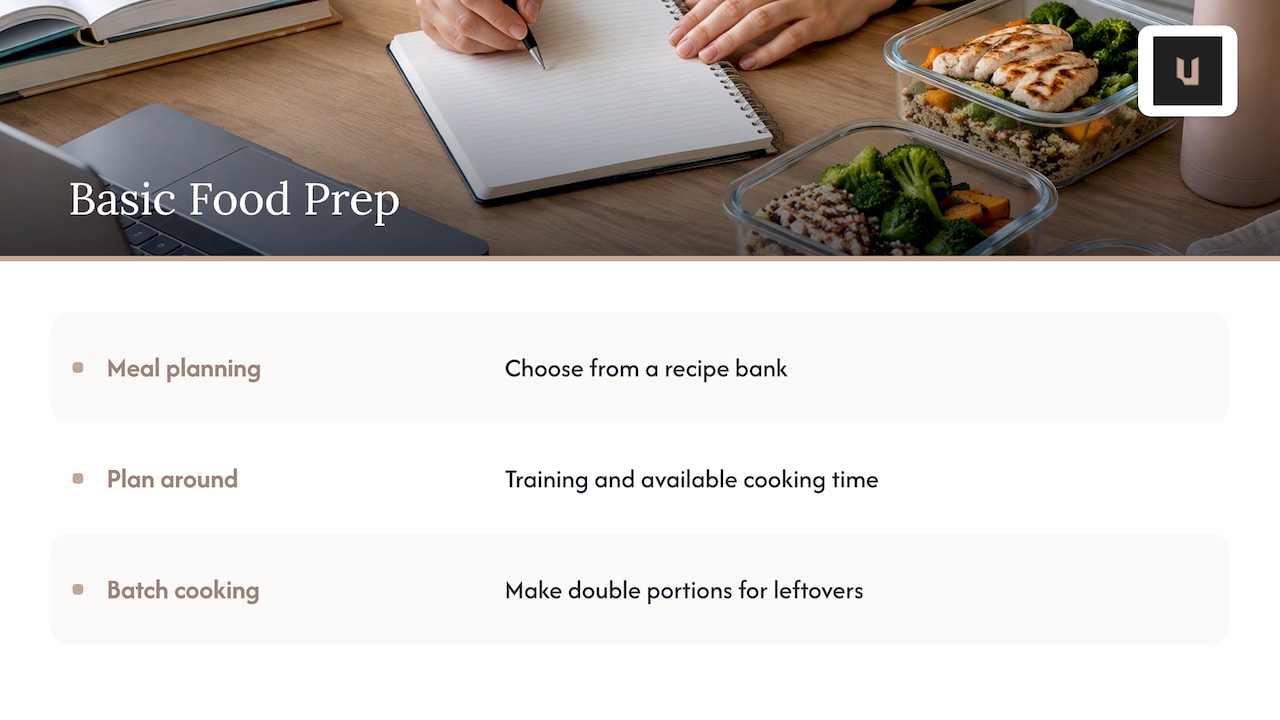
Mark the days you train, and the days you are short on time. Hard sessions need a proper meal beforehand and a recovery meal after. Busy evenings need something in the freezer.
Do not prep ten different meals. Choose two or three you like and repeat them. Variety comes from sauces, sides and toppings.
Buy your protein, carbohydrate and veg in one trip. Frozen veg and frozen fish are cheap, last well and are just as useful as fresh.
One to two hours on a Sunday is plenty. While a stew simmers, roast a tray of veg and boil rice or potatoes. The UK Sports Institute notes that batch cooking can simply mean preparing ingredients to assemble later, so you can use them in several different meals.

Split everything into single portions straight away. Smaller portions cool faster, which is safer (more on that below). Label with the date.
The UK Sports Institute recommends “wet dishes” such as chilli con carne, curries, bolognaise and stews, because they store and freeze well. They give you a dependable fallback for busy days (source).
Here is a simple menu built on that idea:
| Meal | Protein | Carbohydrate | Prep notes |
|---|---|---|---|
| Beef or turkey chilli | Lean mince, kidney beans | Rice or baked potato | Freezes well in single portions |
| Chicken and chickpea curry | Chicken thigh or breast, chickpeas | Basmati rice or naan | Make a double batch |
| Turkey bolognaise | Turkey or beef mince | Wholewheat pasta | Add grated carrot and courgette |
| Lentil and veg stew | Lentils, a little cheese on top | Potatoes or bread | Good for plant-based days |
| Overnight oats | Greek yoghurt, milk, protein powder if you use it | Oats, fruit | Three days in the fridge at most |
| Traybake | Chicken thighs or salmon | New potatoes, roast veg | One tray, minimal washing up |
For more breakfast ideas, see our list of high protein breakfasts you can make ahead. For snacks you can carry in a gym bag, try our portable high protein snacks.
The most common reason meal prep fails is boredom. Cook a plain base, then change the flavour through the week. Different herbs and seasonings turn the same chicken and rice into a new dish. A set of homemade spice blend recipes is an easy way to rotate flavours without cooking something new every day.
This is an example for an 80 kg person aiming for around 140 to 160 g of protein. It is an illustration, not a prescription. Scale portions to your own body, appetite and goals.
| Time | Meal | Rough protein |
|---|---|---|
| Breakfast | Overnight oats with Greek yoghurt and berries | 30 g |
| Lunch | Chicken and chickpea curry with rice | 40 g |
| Mid-afternoon | Cottage cheese on rice cakes with fruit | 20 g |
| Dinner | Turkey bolognaise with pasta and veg | 40 g |
| Evening | Milk or yoghurt with a banana | 15 to 20 g |
That is about 145 to 150 g. Protein values are approximate and depend on brands and portion size, so check labels.
Timing matters less than total daily intake, but it makes sessions feel better.
The British Heart Foundation says a balanced meal two to three hours before exercise is ideal. Choose higher-fibre carbohydrates and lean protein. For a lunchtime session it suggests porridge made with low-fat milk and fruit, and for an early evening session chicken and rice. If you are eating less than an hour before, have a small, easily digested carbohydrate snack and avoid foods high in fat or fibre.
The British Dietetic Association agrees that carbohydrate is the main fuel for working muscles, and suggests a low-fat, high-carbohydrate snack or light meal two to three hours ahead, adjusted to your training and goals.
The reason a big meal right before lifting feels bad: sports dietitians quoted by Women’s Health UK explain that digestion and working muscles compete for blood flow, and fatty, high-fibre or spicy foods are harder to tolerate. The same piece suggests about 15 to 25 g each of protein and carbohydrate for a pre-workout snack if you ate your last meal more than a few hours ago.
Prepped pre-training options:
Try new foods on a normal day, not before a heavy session.
After a hard session, the UK Sports Institute advises a carbohydrate and protein snack as soon as possible, within an hour, especially if you train again within 24 hours. Then have a balanced recovery meal 2 to 3 hours after exercise, or sooner if you skipped the snack (source).
This is where meal prep earns its place. Keep a post-training snack in your bag, and a ready portion at home:
The same organisation takes a “food first” view of recovery: whole foods can give you what you need at a lower cost, and with less risk than supplements (source). Protein powder is fine if it helps you hit your numbers, but it is not a requirement.
Drink water through the day and around training. The BDA advises staying hydrated before, during and after exercise, and drinking enough to stay ahead of thirst.
Food is only half of recovery. Our guide to sleep and muscle recovery explains why 7 to 8 hours matters just as much as your post-workout meal.
Prepping for the week is only useful if the food is safe to eat on day four. The GOV.UK guidance on chilling, freezing and defrosting food gives clear rules:
So what does that mean for a Sunday cook? Eat two days of meals from the fridge (Monday and Tuesday), and put the rest in the freezer straight away. Move a portion to the fridge the night before you want it to defrost. Reheat until steaming hot all the way through.
If you are pregnant, elderly, or have a weakened immune system, ask your GP or pharmacist whether you need to be stricter with leftovers.
We coach adults in small groups here in Sheffield, and we see the same pattern again and again. People do not fail because they picked the wrong recipe. They fail because the plan was too complicated to last past week three.
Our advice is simple. Pick two dinners you actually enjoy. Make a double batch. Hit your protein at breakfast, because that is the meal most people miss. Do not chase perfection: if you hit your plan 5 days out of 7, you are doing well.
For our members over 40, the priority is also sustainability. Eating enough protein and training twice or three times a week beats any extreme plan. If that sounds like you, our guides to low impact strength training for 40+ and strength training over 50 show what that looks like in practice.
And if you have a young athlete in the house, the same food-first ideas apply. We cover them in our youth sports nutrition guide.
— Vitalij
Good meals work best alongside a good programme. At UNIT Health & Performance in Sheffield we run small group personal training, where every session is planned around you, with a coach watching your technique and a supportive community around you. We also run fitness classes, and we offer nutrition and accountability coaching. Get in touch through our website to talk through your goals.
Eat cooked meals within 48 hours if you keep them in the fridge, following the GOV.UK advice, and freeze the rest. Cool food quickly and keep your fridge between 0 and 5°C. When you want one, defrost it in the fridge overnight.
The UK Sports Institute suggests at least 20 to 30 g, or about 0.3 g per kg of body weight, every 3 to 4 hours. For most adults that means roughly 25 to 40 g in each main meal. Spreading it out works better than eating most of it at dinner.
Batch-cooked chilli, curry, bolognaise and stews are cheap, filling and freeze well. Build them around mince, chicken thighs, eggs, lentils, beans, rice, pasta and potatoes. Frozen vegetables keep the cost and the waste down.
A carbohydrate and protein snack within an hour is a good habit, especially if you train again within 24 hours. You do not need to rush it to the minute. A proper balanced meal 2 to 3 hours after training completes the job.
No. A food-first approach covers most people’s needs, and the UK Sports Institute points out it costs less and carries fewer risks than supplements. Protein powder can be handy if you struggle to reach your daily target, but it is an extra, not a necessity.