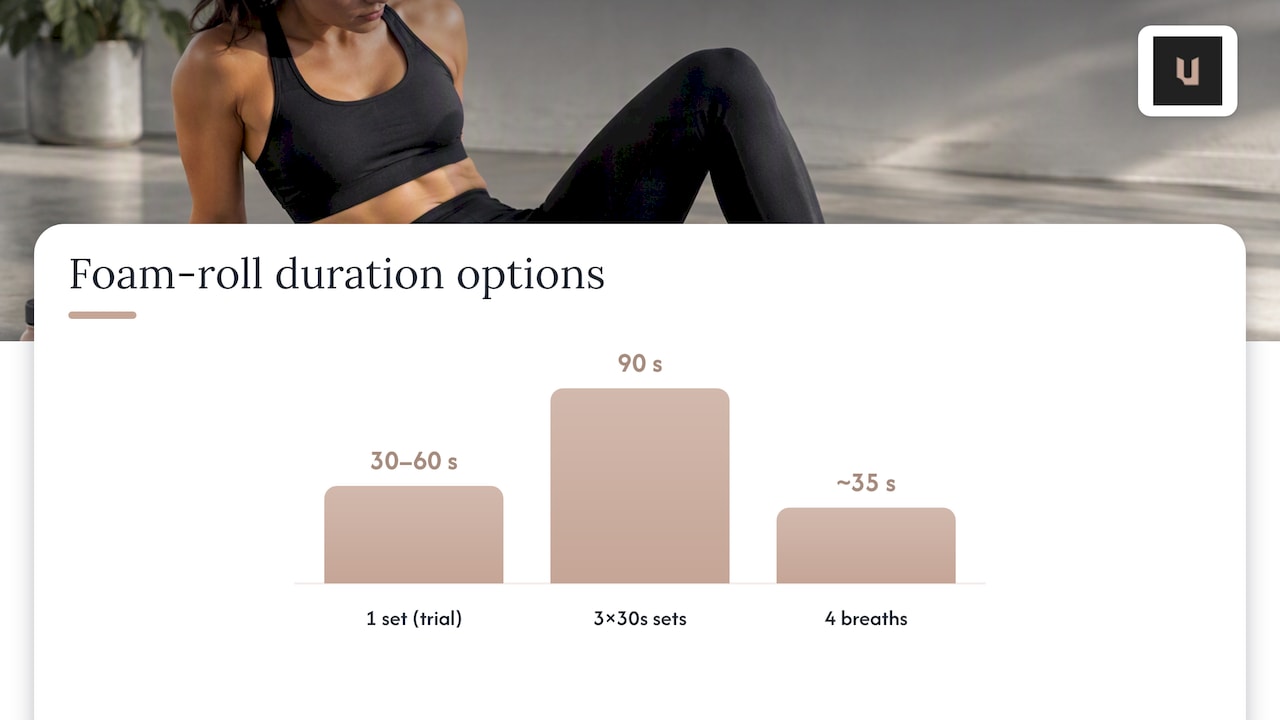
Yes, short bouts of foam rolling before a workout can increase your joint range of motion and carry little to no risk to your strength or power output. The effect on performance is small, and sometimes sport-specific, rather than dramatic. If you choose to foam roll, keep it brief: 30 to 60 seconds per muscle group is the dose used in most trials, followed by a proper dynamic warm-up.
TL;DR:
- Range of motion gains fade quickly, so roll at the start of your warm up and move straight into dynamic drills rather than rolling an hour early.
- A strength warm up can pair quads, glutes, and calves with squats, hip hinges, ankle rocks, and one or two light sets of your first lift.
- Use moderate pressure and slow, controlled passes while breathing evenly; beginners and people with joint issues should use lighter pressure and a single pass.
- Avoid rolling directly over acutely injured, swollen, or inflamed tissue; target nearby muscles, and stop if a spot feels sharp or persistently painful.
Several reviews have now pooled the available trials, and the picture is fairly consistent. A meta-analysis in Frontiers in Physiology found that short bouts of foam rolling, typically 30 to 60 seconds per muscle group, increase range of motion and produce small average changes in performance without impairing strength or power. A systematic review of self-myofascial release reached a similar conclusion: short-term gains in range of motion, no negative effect on muscle performance, and a possible reduction in perceived fatigue or muscle soreness when rolling is paired with a dynamic warm-up.
A broader meta-analysis from NECTAR backs this up, reporting reliable increases in joint range of motion across studies, with performance benefits staying trivial to small and dependent on the task at hand.
Foam rolling for 30 to 60 seconds per muscle group reliably improves joint range of motion, according to the Frontiers meta-analysis, though the effect on strength or power tends to be minor.
Why does this happen? The leading explanation is neurophysiological rather than mechanical. Rolling appears to change how you perceive stiffness and pain, rather than producing any lasting structural change to the fascia itself.
What this means in practice:
Foam rolling fits at the start of your warm-up, before dynamic drills like leg swings, lunges or band work. Think of it as waking the tissue up, not as the main event.
Pressure should feel like firm discomfort, never sharp pain. If a spot makes you wince or hold your breath, ease off rather than pushing through it.
Breathing matters more than people expect. Keep your breaths slow and even while rolling, rather than holding tension in your chest. When you move into loaded work afterwards, a light brace (gently tightening your core before a lift) helps keep your spine stable, especially on heavier compound movements.
Pro Tip: Roll for a count of four breaths per muscle group instead of watching the clock. It keeps your breathing steady and gives you a natural 30 to 40 second window.
Which routine suits you depend on what your session demands. Here are two starting points.
Strength or power session (6 to 8 minutes total):
Mobility-focused session (8 to 10 minutes total):
The range of motion gains from rolling tend to be short-lived, so there is little point doing it long before you train. Roll as the first step of your warm-up, not an hour beforehand, and move into your dynamic drills while the effect is still fresh. For a structured sequence to follow afterwards, a short dynamic warm-up pairs naturally with this approach.
Foam rolling is hard to get badly wrong, but a few habits reduce its value or create unnecessary discomfort.
Pro Tip: If a spot feels sharp, persistent or swollen rather than simply tight, stop rolling and get it checked by a clinician before continuing to train on it.
For general joint-friendly programming ideas beyond the warm-up itself, our guide on joint friendly workouts covers adjustments worth knowing.
In small-group sessions, foam rolling is often included in the first few minutes: a short pass on the muscles relevant to that day’s lifts, followed straight into dynamic activation drills. It is kept brief and purposeful rather than treated as its own block.
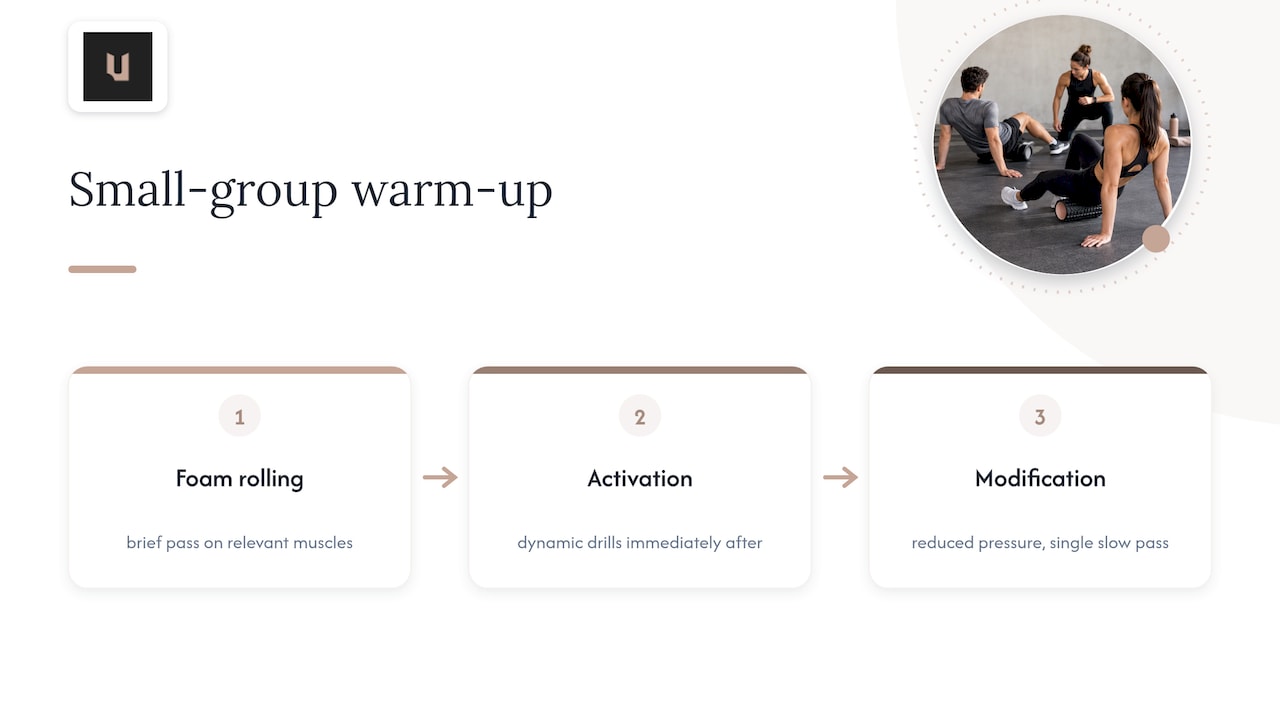
For members over 40 or anyone returning from injury, pressure is reduced and a single slower pass is favoured over repeated heavy rolling, putting more emphasis on the activation work that follows. The goal is to make the warm-up feel easier and more controlled, not to chase a longer session.
For readers who want to build out recovery days around this kind of priming work, our piece on rest day routines covers how low-load activities fit alongside training.
The research supports a modest, specific role for foam rolling: a quick way to improve range of motion and make the rest of your warm-up feel more comfortable. It does not support the idea, still common in gyms, that ten minutes of aggressive rolling before training is doing you any extra favours, or that skipping it will wreck your session.
The conventional advice oversells duration and undersells sequencing. A 30 to 60 second pass on two or three relevant muscles, followed immediately by dynamic movement, beats a long, unfocused rolling session every time. If you only have five minutes before you train, spend most of it on dynamic drills and treat rolling as the brief warm-up to the warm-up.
Prioritise consistency over intensity here: a short, repeatable routine you will actually do before every session matters more than an elaborate one you skip half the time.
— Vitalij
Reading about the right dose is one thing, getting the pressure, timing and sequencing right on your own body is another. In Small Group PT sessions, warm-ups, including foam rolling where it is useful, are coached and adjusted to participants, so there is guidance on pressure and duration.

Fitness Classes include coached warm-ups built into every session rather than leaving this for participants to figure out beforehand. If you would rather see how this fits your own training week, take a look at Small Group PT and get in touch to ask about joining.
Yes, short bouts of 30 to 60 seconds per muscle group are supported by evidence as a safe addition to your warm-up. A systematic review found no negative effect on performance when foam rolling is combined with a dynamic warm-up.
Rolling for too long or with excessive force can cause bruising and unnecessary soreness, since the supporting evidence is based on short bouts rather than extended sessions. It should also be avoided directly over acutely injured or swollen tissue, with surrounding muscles targeted instead.
The most useful timing is right before training, as the first step in your warm-up, since the range of motion benefits are short-lived. Rolling long before a session or well after your dynamic warm-up gives you less practical benefit.
Foam rolling works well as a precursor to dynamic stretching, since it can make subsequent mobility drills feel easier, rather than replacing them outright. One comparison of foam rolling and stretching notes that some rolling methods may match or edge out static stretching for certain range of motion outcomes, though the evidence base here remains small.