If a straight bar overhead makes your shoulder pinch, you do not have to stop pressing. You usually need to change one of four things: the grip, the angle, the tool you hold or the load. Dumbbells, a landmine, an incline bench or the floor can all let you keep building strength while the shoulder settles. This guide shows seven options, how to pick between them and how to tell when to back off.
Pressing a weight straight overhead asks a lot of your shoulder. The arm has to rise high, the shoulder blade has to rotate upwards, and the upper back has to extend. If any of those are stiff, the shoulder often gets squeezed or pulled into an awkward spot. Desk work, old niggles and plain lack of practice all play a part.
The good news is that shoulder pain is common and often not serious. NHS guidance from Wrightington, Wigan and Leigh says it often improves with time, lifestyle changes and appropriate exercises. Staying active, within comfort, usually beats complete rest. Self-help advice from the West Midlands NHS wellbeing service is to balance rest and activity so the shoulder does not stiffen, pace yourself and try to do a little more each day.
Is pressing itself bad for the rotator cuff? The research does not say so. The UK GRASP trial compared a programme of progressive exercise with a single session of best-practice advice from a physiotherapist. After 12 months the exercise group was not better than the advice group, and no serious adverse events were reported. In plain words: movement is generally safe, and there is no single magic exercise. What matters is finding what your shoulder tolerates and building from there.
Every shoulder friendly pressing option below is built from the same four changes. Learn them and you can adjust any press on the spot.
A neutral grip means your palms face each other. It tends to feel kinder than a flat palm facing forwards, and dumbbells or a landmine let you do it easily. Hand width matters on barbell and bench work too. Older clinical guidance says that hand spacing wider than 1.5 times the distance between your shoulder points is generally not recommended if you have shoulder instability or impingement, because it increases the twisting force on the joint.
A 2024 lab study in Frontiers in Physiology looked at bench press technique in 10 healthy, experienced strength athletes. In their model, a grip about one shoulder-point width apart reduced pressure at the collarbone joint and backward shear at the ball-and-socket joint compared with wider grips. It was a small study of healthy lifters, so treat it as a useful hint rather than proof that a grip prevents injury. The practical takeaway is simple: do not take a very wide grip on the bench.
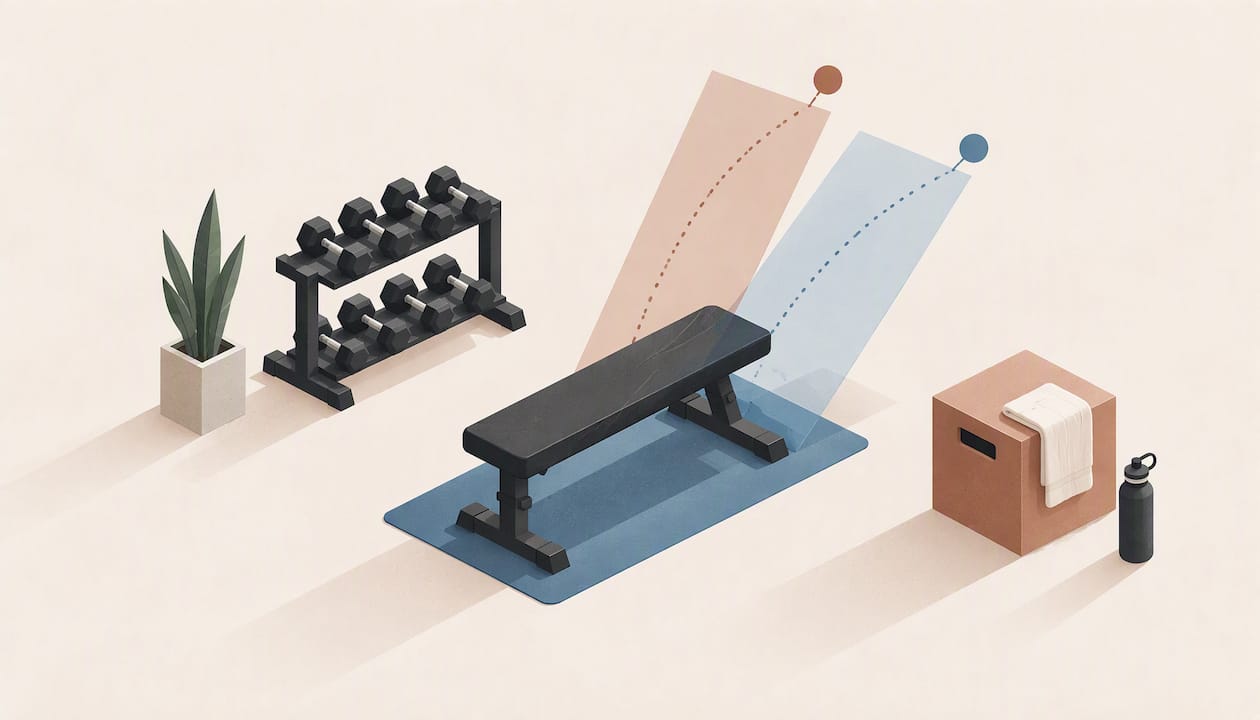
Pressing straight up is the most demanding angle for most people. Tilting the press forwards, as on an incline bench or a landmine, or bringing it lower, as on a flat bench or the floor, reduces how high the arm has to travel. If overhead pressing is painful, swapping to horizontal pressing such as an incline press, or to rowing, may help while the shoulder settles.
Barbells fix your hands in one line. Dumbbells and kettlebells let your arms move on their own path. The National Strength and Conditioning Association says dumbbells or kettlebells are usually preferable to a barbell for pressing, because they allow movement in the scapular plane (roughly 30 degrees in front of your sides) rather than straight out to the side or in a flat line.
Drop the weight and add repetitions. Slowing down or reducing the number of sets also helps. Lighter weights with 10 to 15 clean reps let you groove a pain-free path, then build up over weeks.
Here is a quick comparison, followed by detail on each.
| Exercise | Angle | Grip | Best for | Main watch-out |
|---|---|---|---|---|
| Landmine press | Diagonal, forwards and up | Neutral or close to it | Overhead press alternative with less range | Needs a landmine post or a corner setup |
| Neutral grip dumbbell press (seated) | Overhead, in the scapular plane | Palms facing | Keeping overhead strength with a friendlier grip | Start light |
| Incline dumbbell press | Between flat and overhead | Neutral or slightly turned in | Stepping back from overhead without losing a big press | Keep elbows from flaring wide |
| Incline close grip bench press | Inclined | Around shoulder width | Reducing the shoulder bend needed | Do not go wide |
| Floor press | Flat, range limited by the floor | Neutral or palms forward | Painful bottom position on a bench | Limited range, lighter loads |
| Standing one arm cable press | Forwards | Neutral | Gentle, controlled return to pressing | Needs a cable station |
| Push-up (hands raised) | Horizontal | Hands under shoulders | Body-weight option with adjustable difficulty | Do not let the shoulders roll forwards |
One end of a barbell sits in a corner or a landmine holder, and you press the other end up and forwards. Physiotherapist Beth Ansley notes that landmine pressing gives a more vertical motion than bench press variations while avoiding a full overhead position, and its pivot point allows more freedom of movement than a fixed dumbbell or barbell press.
You can also change how hard the core has to work. The same source describes a staggered-stance standing version as the least demanding, half-kneeling as harder and tall-kneeling as the biggest core challenge. A landmine push press adds a little leg drive if you want to use more load. Another physiotherapy site lists the half-kneeling landmine press as an option that uses a diagonal plane and limits the range of motion.
How to do it: Stand with the bar end at your shoulder, one hand holding it. Brace your stomach, press up and forwards until your arm is nearly straight, then lower slowly. Start with 3 sets of 8 to 10 reps per side.

Sitting with back support takes your legs and lower back out of the equation, so you can focus on the shoulder. Hold the dumbbells with palms facing each other, elbows a little in front of your body rather than straight out to the sides, and press up only as far as feels comfortable. The same physiotherapy source lists the neutral grip dumbbell overhead press as a good option because the palms face each other throughout.
If the top of the movement is the sore part, stop an inch or two short. You are not cheating, you are choosing a range you own.
Set the bench to a steep angle, higher than a standard chest press but not fully upright. A steep angle reduces how far the arm has to rise compared with a standing overhead press. Physiotherapy guidance says that pressing on an incline reduces the shoulder bend needed, and that a close grip reduces stress at the collarbone joint. Lower the dumbbells until your upper arms are about level with the bench, not deeper, then press up.
Same idea with a barbell. Keep your hands about shoulder width apart, which fits the grip guidance above, and stop the bar at your upper chest. If the barbell feels fixed and awkward on your wrists or shoulders, move to dumbbells.
Lie on the floor and press from there. Your upper arms stop when they touch the floor, so you cannot go deeper than your shoulder likes. This is handy if the bottom of a bench press is the painful part. Use dumbbells with palms facing in or a slight turn. Because the floor limits the range, you will probably use lighter weights, and that is fine.
A cable gives smooth, constant tension and lets your shoulder blade move freely. Stand side-on to the cable, hold the handle at chest height and press forwards. Start light, and let the back arm and trunk help you stay steady. It is a popular way to get back into pressing because you can change the weight in very small steps.
Place your hands on a bench, a bar in a rack or a wall. The higher your hands, the easier the push-up. Lower your hands as you get stronger. Keep your hands roughly under your shoulders, with elbows at about 45 degrees from your body rather than flared out wide.
Sometimes no pressing variation feels comfortable. That is not a failure. Strength coaching advice from Human Kinetics is to try pressing less often, using a different grip, implement or plane, and use horizontal pulling or rowing in the meantime. Rows keep your upper back and arms working and mean you do not go a month without training the shoulder area.
A simple swap looks like this:
This is the question most people want answered, and UK NHS guidance gives clear rules of thumb.
A practical way to apply this: rate pain from 0 to 10 during the set. Mild awareness is fine. If it climbs past about 4 or 5, or it is still nagging half an hour later, lower the weight, change the angle or stop that exercise for the day.
See your GP or a physiotherapist if your symptoms are not improving, if you are worried, or if the pain is waking you at night. Seek urgent help for sudden severe pain after a fall or injury, a shoulder that looks out of shape, numbness or pins and needles down the arm, or chest pain. The NHS guidance above says to speak to a GP or physiotherapist if you have concerns or symptoms are not getting better.
A physio visit is not always a long-term commitment. UK physiotherapists commonly use advice, education and isotonic exercise for rotator cuff problems, and a 2023 survey found that 76% agreed patients can recover without formal intervention. An earlier NHS study from 2016 found a self-managed single-exercise programme appeared comparable to usual physiotherapy for rotator cuff tendinopathy. Put together, a few well-chosen exercises, done consistently, can do a lot.
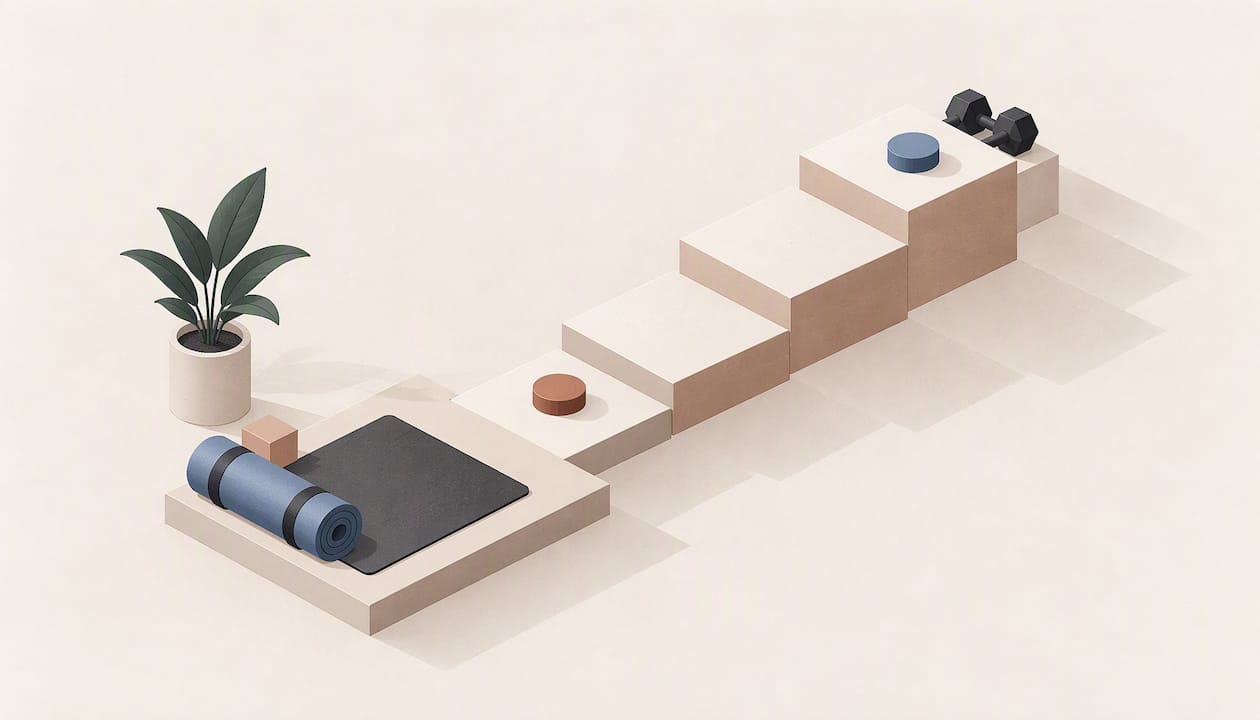
Here is an easy four-step ladder. Move up only when the current step feels settled for a full week.
This follows the NHS idea that return to training can progress from supported exercises in the early painful stage to strengthening as movement improves. Twice a week is plenty for pressing. If you want a bigger picture plan, our twice a week strength guide for over 50s shows how to fit this into a short week.
If your shoulder tightens from desk work, a few minutes a day of desk posture exercises can make pressing feel better. And if other joints are grumbling too, our joint friendly workouts give two plans to start from.
We coach lots of adults over 40 in Sheffield, and sore shoulders are one of the most common things people tell us on day one. Many arrive thinking they must give up pressing for good. We almost never agree with that.

Our view is that the exercise should fit the person, not the other way round. A 45-year-old who sits at a desk all week and a former rugby player with an old shoulder injury need different pressing plans, even if both say “my shoulder hurts when I press overhead”. That is why we work in small groups where the coach can see every rep and change the angle, the grip or the weight on the spot.
We also think the long game matters more than the heavy day. Training that you can repeat for years beats a hero session that leaves you sore for a week. So we start with options that feel good, build confidence, and then slowly bring in more demanding positions if and when the shoulder is ready. If you want a wider view of how this fits into training for the years ahead, see our guide to training for longevity after 40.
— Vitalij
Getting the angle and weight right is much easier when someone is watching you move. At UNIT Health & Performance in Sheffield, our small group personal training is built around individual plans, so your pressing is matched to your shoulders, your goals and your week. Sessions are friendly and non-intimidating, and you never have to guess whether a movement is right. If you prefer a lower-pressure start, you can also look at our fitness classes.
If you are not sure strength training suits you at your age, our guide to two sessions a week of strength training over 40 explains what a realistic start looks like.
The landmine press is the one most coaches reach for first, because it presses on a diagonal and avoids a full overhead position. Seated neutral grip dumbbell presses and steep incline presses are close behind. Pick whichever one feels smoothest, then keep the weight light for the first few weeks.
Not by itself. Research on exercise for rotator cuff related pain, such as the UK GRASP trial, found no serious adverse events, and exercise did not do worse than advice from a physiotherapist. Problems usually come from too much weight, too fast, or a position your shoulder is not ready for. Adjust the grip, angle or load before giving up on pressing.
Often you can, in a modified form. Mild discomfort that eases within 2 hours is considered normal after shoulder exercises, according to NHS guidance. If pain is moderate to high, lasts more than 30 minutes after training, or is getting worse, reduce the weight or stop that exercise and speak to a GP or physiotherapist.
Two sessions a week is a good starting point for most adults. Leave at least a day between sessions, and balance your pressing with rows. If your shoulder is sore, cut the number of sets before cutting the whole exercise.
For a short time, yes. If no pressing variation feels comfortable, rows keep your upper body training while the shoulder calms down. Try a light landmine or floor press every week or two to see whether you can bring pressing back.