The most effective approach combines weight-bearing impact exercise with progressive resistance training, done consistently each week. UK government guidance recommends at least 150 minutes of moderate aerobic activity weekly plus muscle-strengthening work on two or more days. If you have osteoporosis, ask a GP or physiotherapist for advice on choosing suitable exercise.
TL;DR:
- Two weekly strength sessions can cover a hinge, squat, push, pull, and brace for 8 to 12 repetitions each, using bodyweight or bands.
- Brisk walking and stair climbing count as impact exercise, while swimming and cycling do not; squats, rows, and pushups provide resistance.
- The Royal Osteoporosis Society suggests around 50 moderate impacts on most days; spread them through the day if one session feels difficult.
- If you have osteoporosis, consult a GP or physiotherapist before starting or changing your plan, especially after spinal fractures or multiple broken bones.
- Avoid aggressive spine bending, such as sit ups or deep forward bends, unless a physiotherapist has taught you a safe modification.
Weight-bearing impact exercise means any activity where your feet strike the ground and your body works against gravity. According to Royal Osteoporosis Society guidance, this ranges from low-impact options like brisk walking and stair climbing to moderate and higher-impact choices such as jogging, dancing and tennis. Swimming and cycling, however good for your heart, do not count because your joints never bear your full weight against the ground.
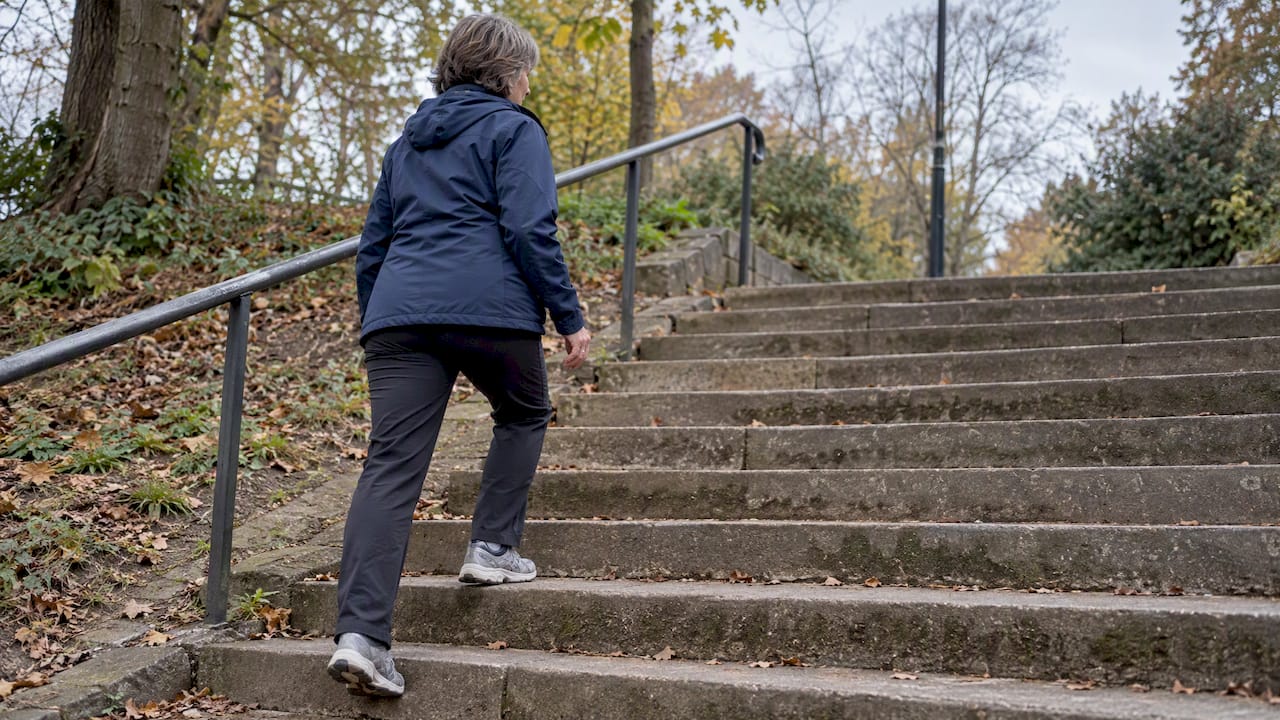
Resistance training works differently. Resistance training uses your bodyweight, bands, dumbbells or gym machines to work your muscles. Squats, lunges, press-ups and rows all create this effect.
The same source describes combining impact and strength exercises as the gold standard for bone health.
Balance work does not build bone directly, but it reduces your chances of a fall that could fracture weakened bone, which makes it a sensible addition to any routine built around impact and resistance.
A workable week needs three elements: strength sessions, daily impact, and regular balance practice. None of it requires a gym membership, though having one gives you access to equipment and supervision.
At home, resistance bands and bodyweight progressions replace dumbbells and machines without losing the training effect. A loaded rucksack can stand in for a weighted vest on walks if you want to add resistance to an impact session.
Pro Tip: If you enjoy walking, you could take a short walk before your strength session.
If you want a ready-made structure rather than building one from scratch, our guide to strength training for over 40s lays out a twice-weekly plan aligned with this same approach.
Osteoporosis does not rule out exercise. According to the Royal Osteoporosis Society, most people with the condition can exercise safely, though some need to adjust how they do it.
Balance training may be worth discussing with a GP or physiotherapist as part of your exercise plan.
A sensible weekly structure follows the UK Chief Medical Officers’ guidelines: 150 minutes of moderate aerobic activity plus muscle-strengthening activities on at least 2 days a week.
Our article on training for longevity after 40 covers how this twice-weekly strength and 150-minute cardio combination supports long-term function, not just bone density.
Attach strength sessions to something you already do daily, such as straight after a shower or before dinner, so the habit forms without relying on motivation. Vary the angles and loads you train through: a squat, a lunge and a step-up all work your legs differently and spread the bone stimulus across more directions.
Log your sessions simply: exercise, load, and daily impact count. Increase only one variable at a time, whether that’s reps, load or impact intensity.
Pro Tip: If you are unsure about your technique or the load you are using, ask a qualified professional for guidance.
Working with adults over 40 day to day, we see the same pattern again and again. We encourage members to learn movement techniques and progress gradually. In small-group sessions, we prioritise correct movement patterns before adding load, then build resistance and impact gradually alongside each member’s starting point.
Accountability matters as much as programming. A small group can make training feel like a shared habit rather than a solo decision. That consistency, maintained over months rather than weeks, is what actually changes bone and muscle strength.
— Vitalij
We built our small-group personal training around exactly this combination: progressive resistance, supervised technique and a supportive group that keeps you showing up. Members train together but follow plans adjusted to their own history and starting strength.
If this sounds like what your routine is missing, view our Small Group PT page to learn more.
This article is general information, not a substitute for advice from a qualified doctor. Consult a qualified healthcare professional about your own circumstances before acting on anything here.
Yes. Bone remains responsive to mechanical loading throughout life, and combining weight-bearing impact with resistance training supports density at any age. Muscle mass and bone density often begin declining from around age 50, which makes building strength habits in your 40s particularly useful.
Brisk walking, jogging, stair climbing, squats and press-ups each contribute to bone health through impact or resistance. Combining a few impact exercises with a few resistance exercises, as outlined by the Royal Osteoporosis Society, gives bone a broader stimulus than either type alone.
Avoid exercises that flex or round the spine aggressively, such as traditional sit-ups or deep forward bends, unless a physiotherapist has taught you a safe modification. High-impact activities may also need adjusting depending on your fracture history, so check with a GP or physiotherapist first.
Exercise can help maintain and, in some cases, improve bone density, particularly when it combines weight-bearing impact with muscle-strengthening work. Changes take time, so consistency matters more than intensity in any single session.
Calcium and vitamin D support the bone-building process that exercise stimulates, so adequate intake matters alongside training. Protein also plays a role in maintaining muscle that supports bone loading, and specific protein targets for women over 40 can help guide food choices alongside your training plan.