Small-group personal training builds training confidence by combining coached repetition, individual scaling and social support. Research links this format to greater exercise self-efficacy and life satisfaction, and it works for exactly the people who struggle most in ordinary gyms: adults over 40, busy professionals, and anyone recovering from injury. A gym in Sheffield runs this model directly. If you want a next step, the checklist below tells you exactly what to look for before you sign up.
TL;DR:
- Small-group training accelerates confidence by providing immediate, tailored feedback and consistent practice that develops self-efficacy more effectively than solo workouts.
- Programs with a coach-to-participant ratio of four to six, clear progression plans, and injury-aware screening build trust and confidence more reliably than crowded or unstructured classes.
- Confidence gains typically become noticeable within four to eight weeks, with broader self-assurance outside the gym often visible after three months.
- For youth, structured coaching with measurable achievements and positive, specific feedback supports confidence and character development more than generic programs.
- Choosing programs that prioritize qualified oversight, individual scaling, and community fit ensures lasting confidence growth over superficial intensity or large, impersonal classes.
A 2017 study published in the Journal of Strength and Conditioning Research found that satisfaction with small-group, individualised training was linked to greater exercise self-efficacy and life satisfaction. That matters because self-efficacy, your belief that you can actually do the thing, is the psychological engine behind confidence. It doesn’t come from motivation. It comes from evidence you gather about yourself, one session at a time.
Small groups generate that evidence faster than solo gym visits ever could. A coach can watch your squat depth, adjust your grip, and confirm you’re doing it right, all within the same set. That kind of feedback loop is largely absent when you’re following a workout app alone.
The practical benefits stack up:
For older adults, busy professionals and anyone easing back from injury, these aren’t nice extras. They’re the difference between training that sticks and training that fizzles out by February.
Pro Tip: If you’re nervous about your first session, ask to watch one before joining. Seeing how a group actually runs does more for your confidence than any sales conversation.
Confidence isn’t a mood. It’s a skill built through repeated proof that you can handle something you once found difficult. Small-group training builds that proof through three linked mechanisms.
The timeline is fairly predictable. Most people notice a shift in how they carry themselves in the gym within four to eight weeks, usually once they’ve stopped needing to check every movement against the person next to them. By three months, the confidence tends to show up outside the gym too, in posture, in willingness to try new activities, in how people describe themselves physically. None of this happens by accident. It happens because coaching cues and monitored progressions give your brain a steady stream of small wins to track.
Confidence in youth sport doesn’t develop in isolation. It sits inside a framework researchers call the 4Cs: competence, confidence, connection and character. A 2024 study in Frontiers in Sports and Active Living found that coach-led interventions built around these principles reduced unstable self-confidence in young athletes and improved several other 4Cs outcomes.
For parents, the practical question is what a session actually needs to contain to deliver that. Look for:
Research on elite youth soccer players backs this up directly: performance accomplishments, coaching feedback, social support and preparation were identified as the main sources of sport confidence, and coaches who structure practice around visible, frequent wins produce confidence that transfers beyond the pitch.
Watch how a coach behaves, not just what they say. Good signs include autonomy-supportive coaching (explaining the “why” behind a drill), clear rationale for each session, and chances for young athletes to lead a warm-up or demonstrate a movement. Safe, appropriately pitched challenge beats easy praise every time.
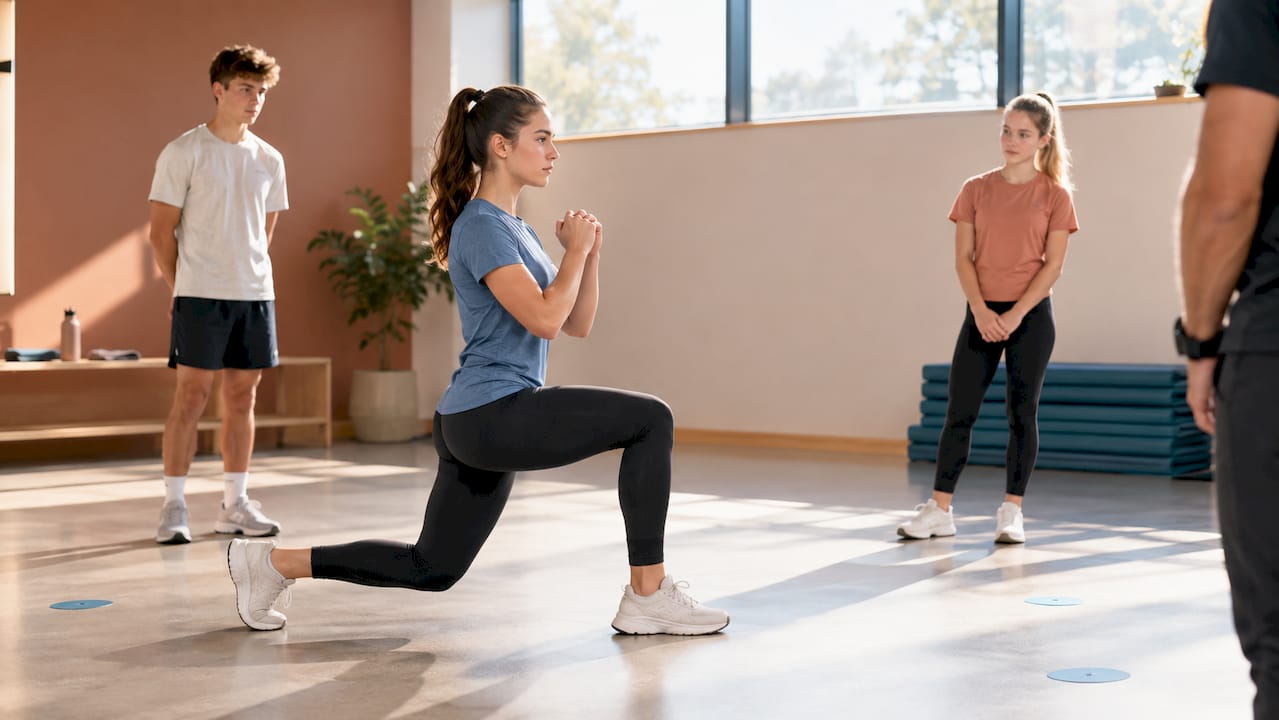
Not every “small group” class delivers the outcomes above. Some are just crowded classes with a different name. Five things separate the programmes that build genuine confidence from the ones that don’t.
Red flags are just as telling: no initial screening, oversized classes with one coach shouting instructions, or a coach who changes every week with no continuity. None of that builds trust, and trust is what confidence is built on.
Pro Tip: Ask how many sessions a week the programme recommends for someone starting out. Two to three structured sessions weekly is the typical shape that supports steady progress without burning people out.
This gym runs small-group personal training and youth athlete development from its facility, structured around the same principles covered above rather than around generic class formats. Adult members train through Small Group PT, with individualised plans inside a coached group setting. Younger athletes work through named programmes: The SpeedAcademy for speed and agility development, and The SuperStrong for strength and power work suited to developing athletes.
The gym has built a community of more than 100 members who have completed over 1,200 workouts between them, numbers reflecting sustained attendance rather than a one-off sign-up rush. New members typically spend their first six to twelve weeks learning movement patterns, getting screened for existing niggles, and building the consistency that later turns into visible strength and confidence gains.
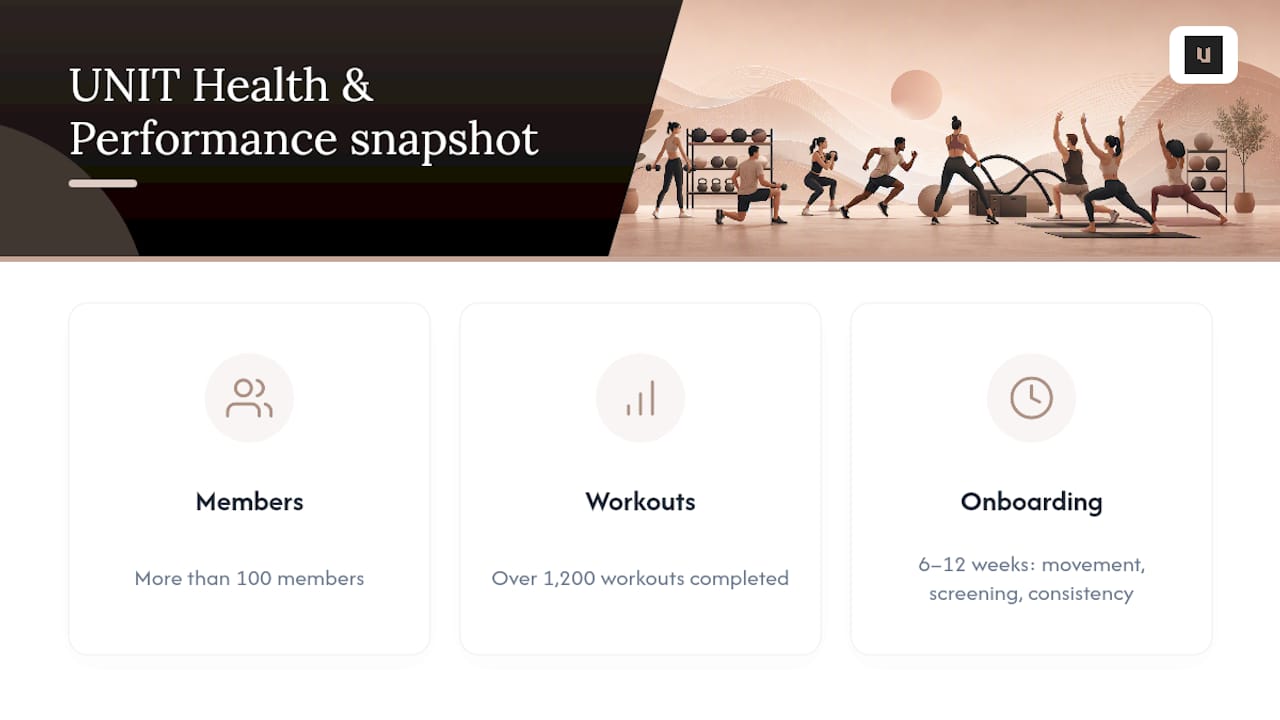
Against the checklist above, the shape holds: coached small groups, a stated progression focus, and injury-aware attention baked into how sessions run from day one.
The evidence on small-group training is solid as far as it goes, but most coverage of it stops at the physical outcomes: strength gained, weight lost, fitness improved. That’s the easy part to measure and the least interesting part of what actually happens.
What the research on self-efficacy and the 4Cs actually supports is something less obvious: confidence built in a small group transfers. It shows up in how someone stands in a meeting, how a teenager handles a setback at school, how a 50 year old approaches a hike they’d have avoided a year earlier. Conventional gym marketing barely touches this because it’s harder to put in a before-and-after photo.
Where I’d push back on common advice is the obsession with intensity. Plenty of programmes chase harder workouts as the route to confidence, when the research points somewhere else entirely: confidence comes from mastery, not exhaustion. A session that leaves you certain you did something correctly beats one that just leaves you tired.
If you’re choosing where to start, prioritise coach attention over class size, and progression over intensity. Everything else follows from getting those two things right.
— Vitalij
UNIT Health & Performance is the alternative to guessing your way through a generic gym programme: coached small groups with individualised plans, built around the same progression and screening principles covered above, rather than a crowded class where nobody notices whether your form is right.
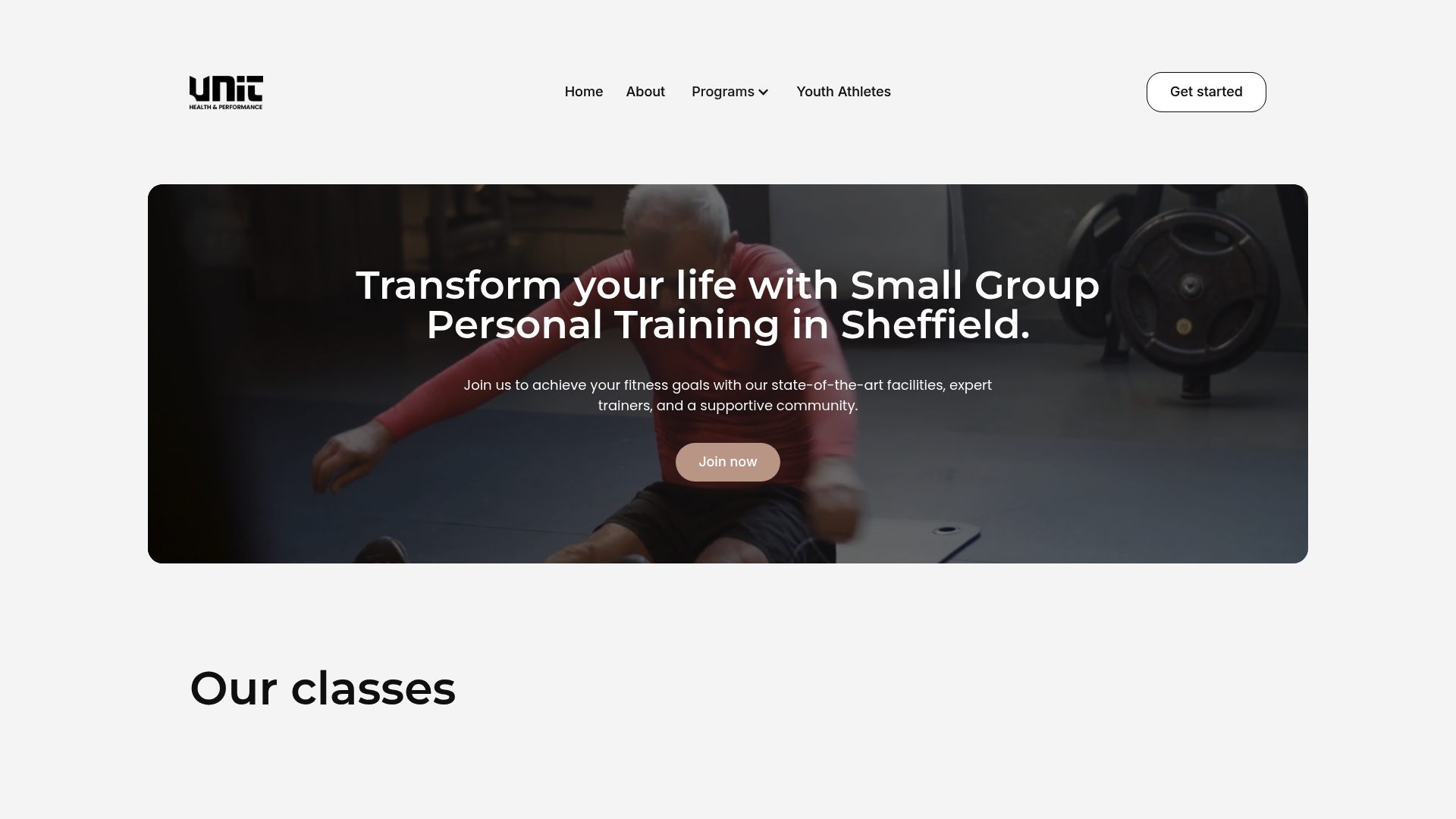
Booking a taster or consult is straightforward. Before your first visit, it’s worth jotting down your injury history, your current activity level, and what you actually want out of training, whether that’s strength, confidence, or simply not dreading the gym anymore. Adults can look at Small Group PT, while parents of young athletes can check The SpeedAcademy and The SuperStrong for age-appropriate speed, agility and strength development.
When you visit, confirm three things: the coach-to-member ratio, whether you’ll be screened before your first proper session, and whether a trial session is available before you commit. If a programme can’t answer those clearly, that tells you something. Book a consult with UNIT Health & Performance and see how the checklist plays out in person.
Most people notice a shift in how they move and feel in the gym within four to eight weeks. Broader confidence gains, ones that show up outside training too, tend to appear around the three-month mark.
Small-group training gives you expert coaching plus peer support at a lower cost than one-to-one sessions. The social element supports self-efficacy in ways solo sessions don’t replicate.
A ratio of roughly four to six participants per coach is widely used as a practical balance between individual attention and group energy. Larger classes without close coach oversight rarely deliver the same confidence gains.
Yes. UNIT Health & Performance runs The SpeedAcademy and The SuperStrong, youth athlete development programmes focused on speed, agility, strength and power, built around structured coaching and measurable progress.
Current pricing for Small Group PT is available directly on the UNIT Health & Performance website rather than listed publicly here. Contacting the gym directly is the quickest way to get an exact figure for your circumstances.