Flexibility is how far your muscles and joints can be moved, often with help from gravity, a strap or your own hand. Mobility is how well you can control a joint through that range under your own power. You can have lots of the first and very little of the second. For most adults, and especially for people over 40, the better plan is to train mobility first, using strength and controlled movement, and to use stretching as a helpful extra.
This guide explains the two terms in plain English, shows how they fit together, and gives you a simple weekly routine. It also covers hypermobility, because “just stretch more” is poor advice for some people.
The two words get swapped all the time, but they mean different things. The American College of Sports Medicine (ACSM) describes flexibility as the passive range of motion of a joint, set by how far your soft tissues can lengthen. Mobility is the ability to actively control movement through a range, and that takes strength, coordination and balance.
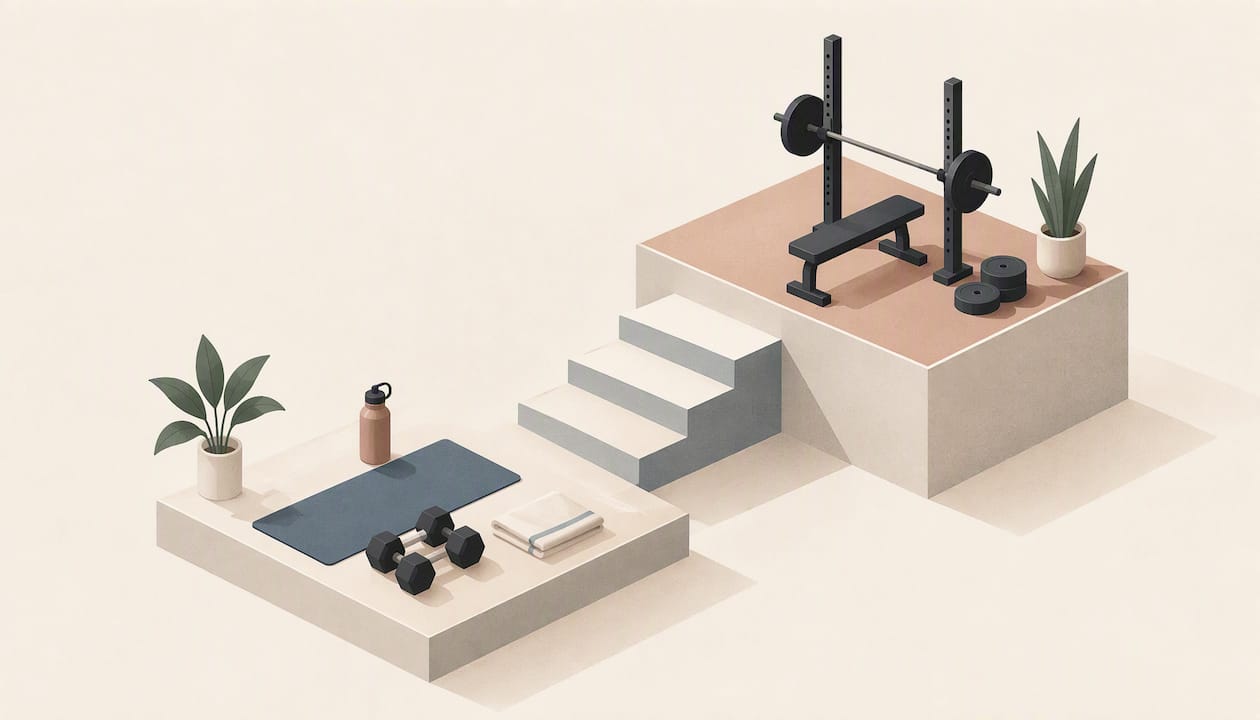
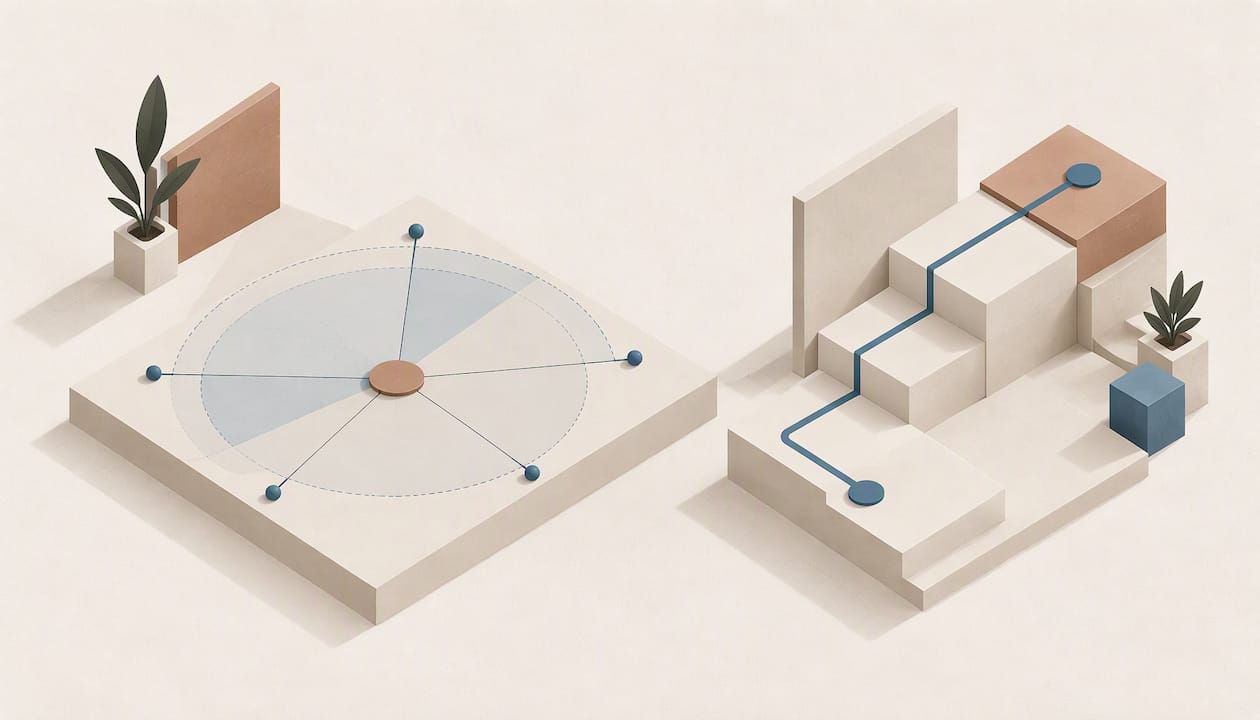
Here is an easy way to picture it:
Flexibility gives you the potential for movement. Mobility decides whether you can safely use it. A person who can pull their foot to their head in a yoga class but wobbles in a deep squat has plenty of flexibility and limited mobility in that position.
| Flexibility | Mobility | |
|---|---|---|
| What it is | How far a muscle or joint can be moved | How well you control a joint through its range |
| Type of movement | Passive, with help from gravity, a strap or a partner | Active, using your own muscles |
| What it needs | Tissue that can lengthen | Flexibility plus strength, balance and coordination |
| Typical training | Static stretching, holding a position | Controlled drills, loaded movements, strength through full range |
| Real-life test | Can you touch your toes? | Can you squat down, stand up and reach overhead without strain? |
Mobility therefore includes flexibility. It is flexibility you can control. Other explainers describe it the same way: mobility as flexibility combined with strength.
Many people assume that stretching automatically improves how they move. ACE Fitness explains that a person can show good passive flexibility in an assessment and still struggle to control the same range during a squat or a run. Holding a stretch asks your muscle to relax. Real life asks it to work.
There is also the question of what “tight” actually means. Often a stiff feeling is not a short muscle. It is your nervous system acting as a safety brake. If your body does not feel strong and stable in a position, it limits how far you go. The NHS trust guidance on hypermobility points the same way: tightness can be a protective response rather than a structural limit.
This changes what helps. If the brake comes from a lack of confidence in the position, you will not fix it by pulling on the muscle for 30 seconds. You fix it by showing your body that the position is safe, which means practising it with control and adding strength there.
A 2026 paper in Sports Medicine argues that the fitness world often treats “flexibility training” and “stretching” as the same thing. Strength training through long muscle ranges can build range of motion as well as, or better than, static stretching, and it builds strength at the same time. A deep goblet squat, a Romanian deadlift or a split squat with a long stride all train range and control together.
That does not make stretching useless. Static stretching can still increase passive flexibility, and many people find it relaxing. It just should not be the only tool, and it should not be the first one you reach for.
For most people the answer is mobility first. There are three reasons.
Stretching still has a place. Many people like to stretch after a session, when they are warm, or in the evening to wind down. If you want to read more about how gentle daily stretching fits with movement and blood flow, there is a useful overview of daily stretching and circulation.
You do not need a complicated programme. Try this three times a week, or as a warm-up before any workout. Move slowly and stay in a range that feels strong, not painful.
| Drill | What to do | Reps |
|---|---|---|
| Cat-cow | On hands and knees, round and arch your back slowly | 8 |
| 90/90 hip switch | Sit with both knees bent at right angles, rotate your knees side to side | 6 each side |
| Deep squat hold with support | Hold a doorframe or post, sink into a squat, lift your chest | 3 holds of 20 seconds |
| Thoracic rotation | On your side or on hands and knees, rotate your upper back and follow your hand with your eyes | 8 each side |
| Wall slides | Back against a wall, slide arms up and down without arching | 10 |
| Calf raise with a pause | Rise onto your toes, pause, lower slowly | 10 |
The rule is simple: if you can only reach a position with help, you have flexibility there. If you can get in, hold it and come back out under your own control, you have mobility there. Train the second one.
If you have a recent injury, ongoing pain, or a medical condition affecting your joints, see your GP or a physiotherapist before starting a new routine.
As we get older, joints often feel less bendy. Children are usually very flexible and become less so as they grow. That is normal. The question is what you do about it.
The NHS advises that strength and flexibility exercises help you build muscle strength, maintain bone density, improve balance and reduce joint pain. Notice that strength comes first in that sentence. For adults over 40 who want to feel stronger, leaner and fitter, resistance training does a lot of the mobility work by itself. It builds the strength and confidence to move through full, pain-free ranges.
If you want to go further on this, these pages from our own blog connect closely:
Some people are naturally very bendy. Joint hypermobility, often called being double-jointed, is a normal variation in many children and adults. It is about how far the joints can move because of the ligaments, not about muscle length. The same NHS trust notes that around 27% of 13-year-old girls and 10% of 13-year-old boys show hypermobility.
For most hypermobile people it causes no problems. For some, it brings pain, a feeling of instability or tiredness. In that case the advice in UK health services is clear: the main treatment is improving muscle strength and fitness so the joints are better protected. Adding more stretch to joints that already move too far is usually not helpful.
So if you are naturally bendy, the flexibility vs mobility difference matters even more. You already have the range. What you need is control of it. Strength training, core work and slow, controlled movement at the end of your range are the tools. If you want to see how joint stress can be managed through exercise instead of extra stretching, this piece on joint stress and exercise is a good starting point.
If you have pain, swelling, joints that slip out of place, or a diagnosis of hypermobility spectrum disorder, ask your GP for a referral to a physiotherapist who can build a plan around you.
We work with adults over 40 and with young athletes in Sheffield, and the same pattern comes up again and again. Someone tells us they need to get more flexible. They have started stretching, perhaps watched a few videos, and still feel stiff.
When we look at how they move, the issue is rarely a lack of stretch. It is usually a lack of strength and confidence in certain positions. The hips do not feel safe in a deep squat, so the body shuts the movement down early. We get better results by loading those positions gently, with coaching, so the body learns they are safe.
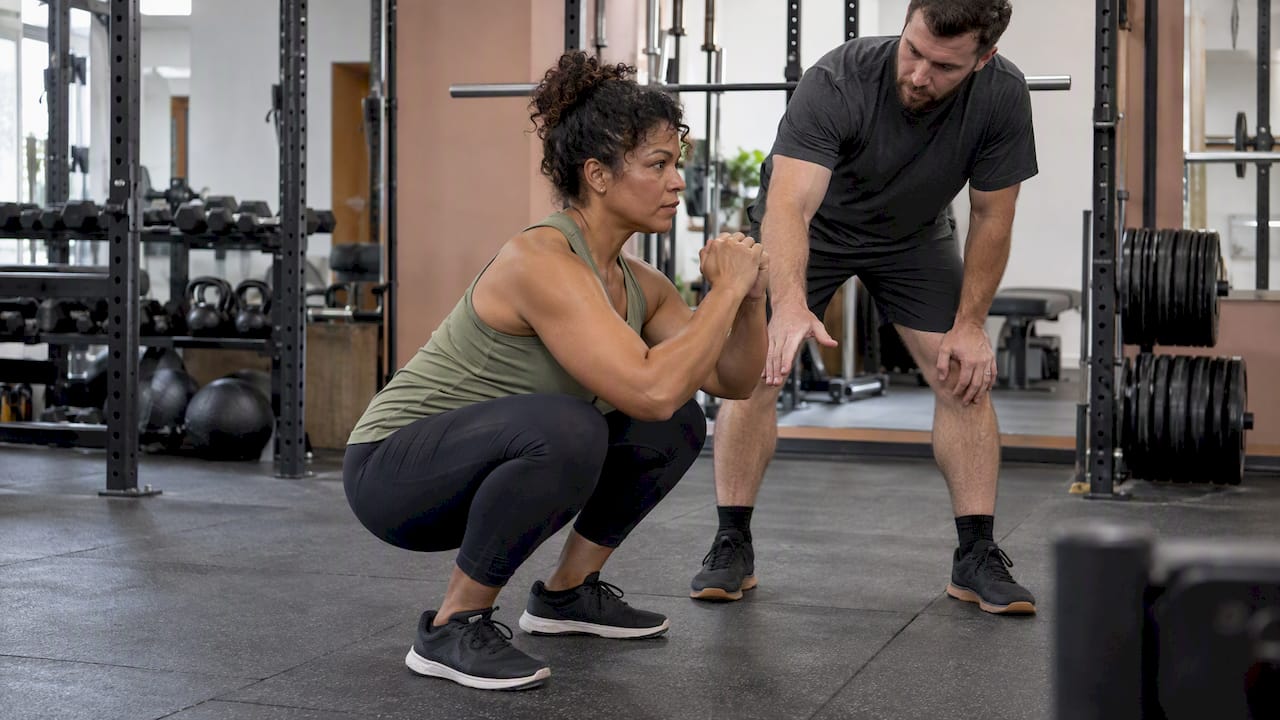
That is why our sessions build mobility into the training itself. Small groups mean a coach can see how each person moves, change an exercise for a sore shoulder or a stiff hip, and make sure the range you use is a range you control. Over time the feeling of tightness drops, and people tell us everyday jobs get easier.
Our advice is simple: warm up with active mobility, lift with control, and stretch if you like it. Do not judge your progress by whether you can touch your toes.
— Vitalij
If you would rather not work all this out alone, our small group personal training in Sheffield is built for adults who want to get stronger, leaner and fitter in a friendly, non-intimidating setting. Each person gets an individualised plan within a small group, so mobility and strength are matched to you. We also run fitness classes, conditioning and hybrid sessions for adults. For young athletes, The SpeedAcademy and The SuperStrong build speed, agility, strength and power, with sound movement as the base.
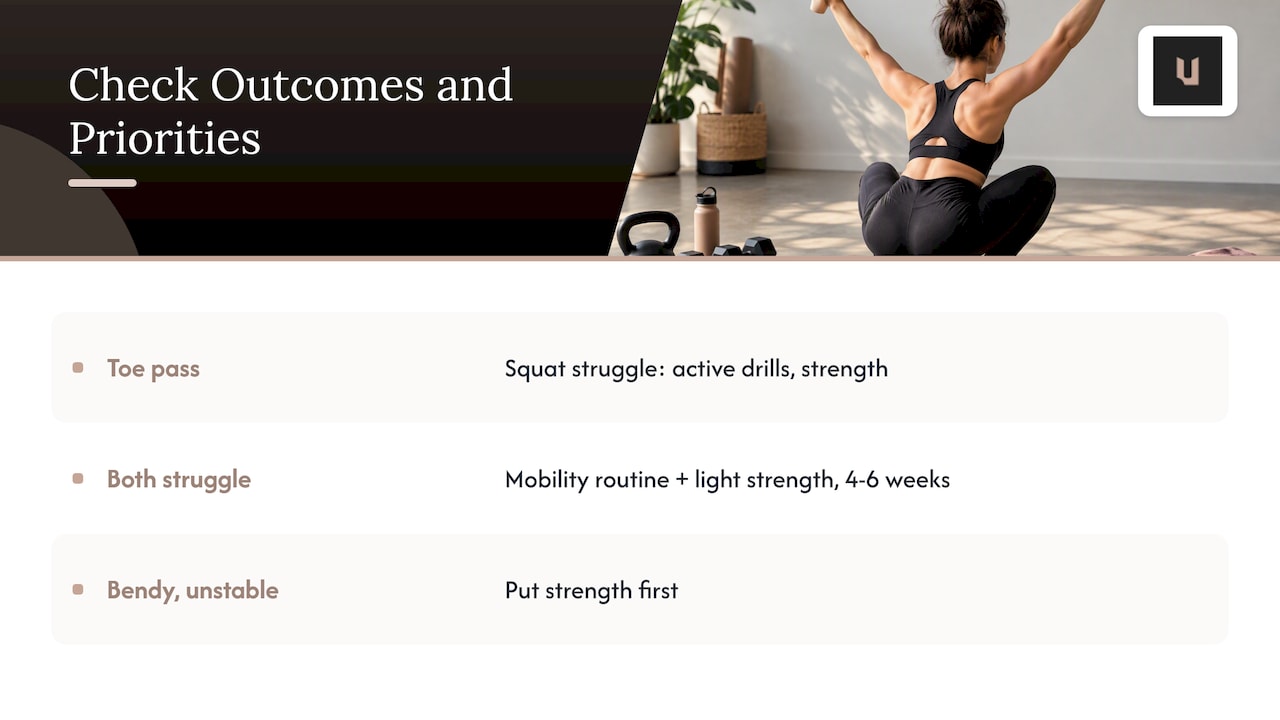
Try two quick checks. First, sit on the floor and see how far you can reach towards your toes with your legs straight. That is a rough flexibility test. Second, lower into a bodyweight squat with your arms out in front, with heels down, and stand back up without wobbling. That is a rough mobility test.
If you pass the first but struggle with the second, focus on active drills and strength. If you struggle with both, start with the mobility routine above and add light strength work, then see how you feel after four to six weeks. If you are bendy and unstable, put strength at the top of the list.
No. Stretching is one way of improving flexibility. Mobility is about actively controlling a joint through its range, so it uses controlled movement and strength, not just holding a position. Some stretches can be part of a mobility session, but they are not the whole of it.
No. Flexibility is about how far a muscle can lengthen. Hypermobility is about joints moving further than usual because the ligaments allow it. If you are hypermobile and have pain, strength and control are usually the focus, not more stretching.
Yes. You might be able to get into a deep stretch with help, yet lack the strength and control to move into that position by yourself. That is why a squat or an overhead reach can feel harder than a seated stretch.
For most people it is a better first choice, because it warms you up and builds strength and control at the same time. Stretching can still be a nice addition afterwards. If you have a health condition or pain, check with your GP or physiotherapist first.